The brief
Steamline was my test of lifestyle product photography for a product people look at closely. I wanted to see whether one real case could travel through a whole journey of scenes and still be the same case at the end.
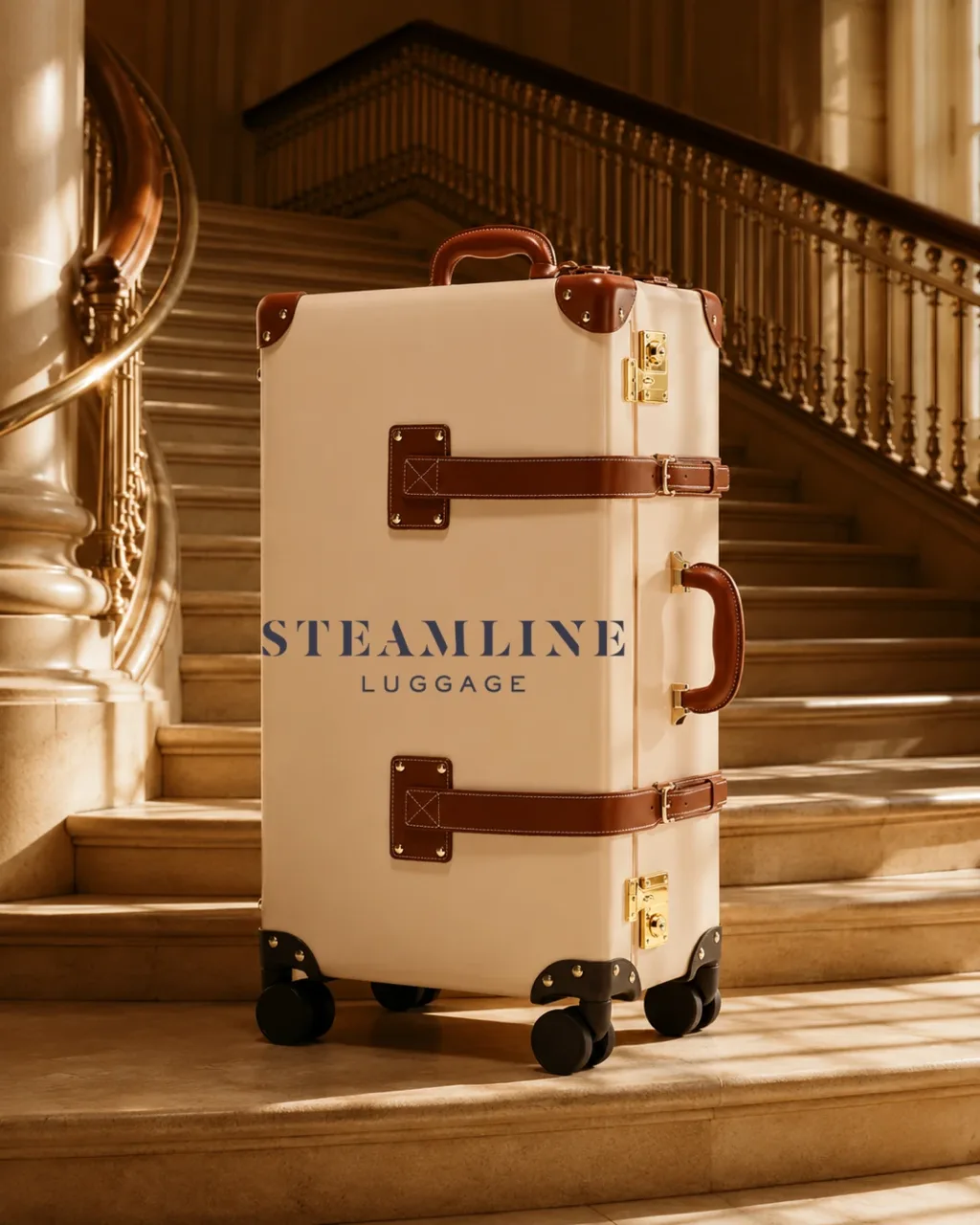
Steamline Luggage is a real brand. I made this as a concept campaign, on my own initiative, and the brand did not commission or endorse it. I built the set around their cream case, with its brown straps, corner caps and handles, gold-tone locks and a wave-striped lining, and the small case that goes with it. When I shared the set, I described it as an ode to slow travel and the vintage soul of Steamline. That gave the set its shape. It follows one traveller from departure to arrival, and the case is the thread through it, from the station hall to the hotel room where it finally opens. The traveller and every place she passes through were made with AI.
The direction
I treated it as luxury product photography set in an older world of travel, with the palette held to brown, cream, ivory and gold. The light is warm in every frame and the grain is fine, which holds the set together as one world.
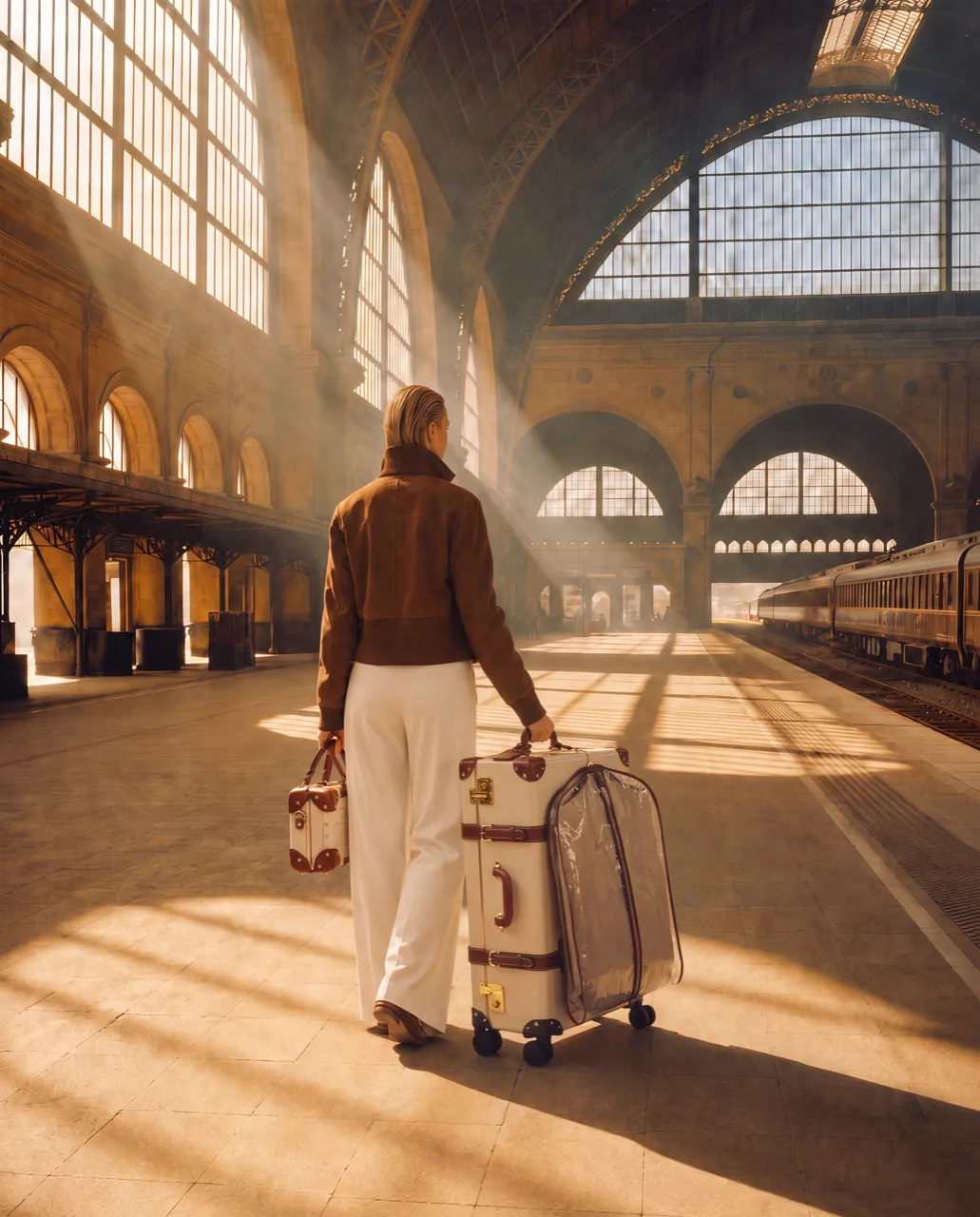
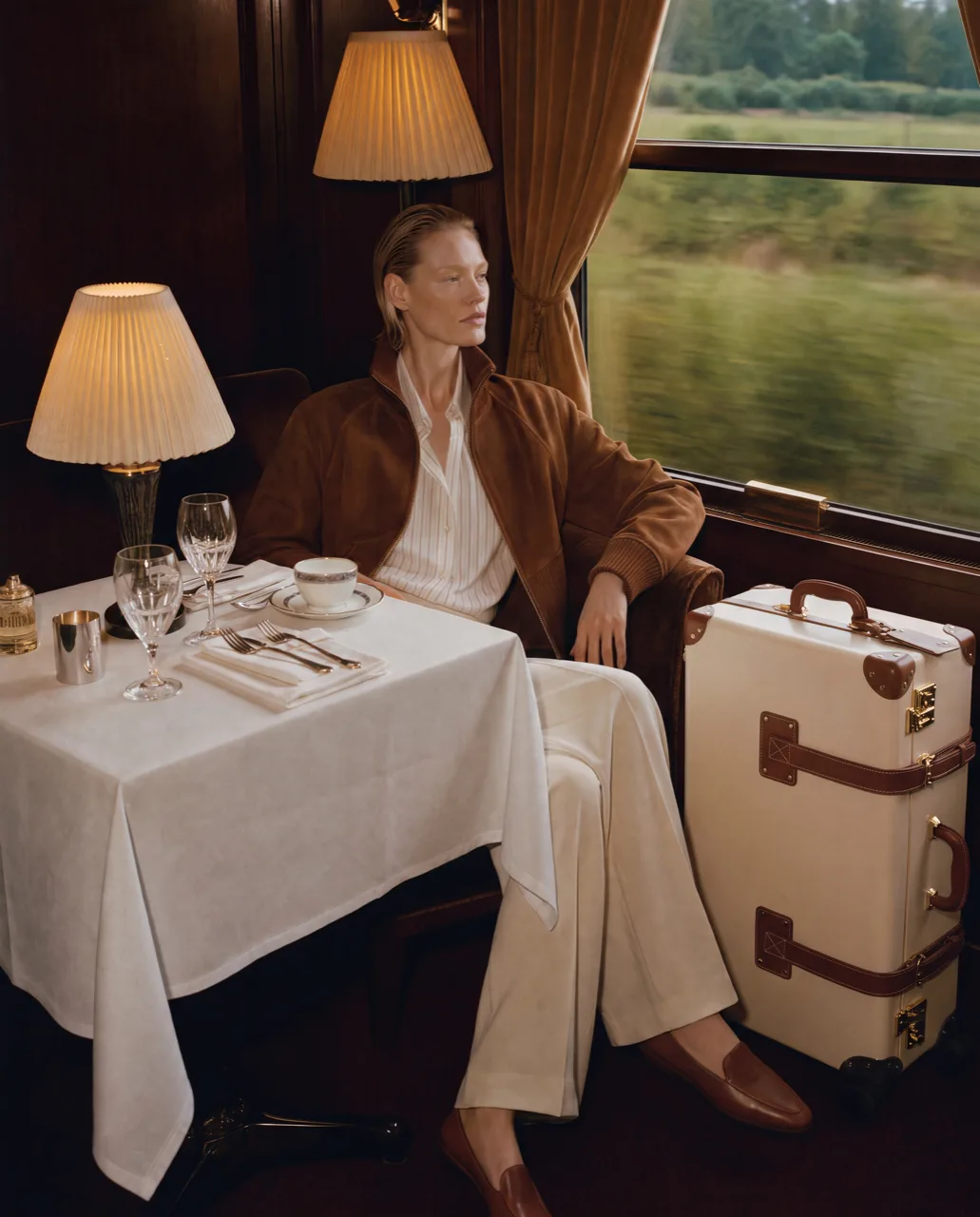
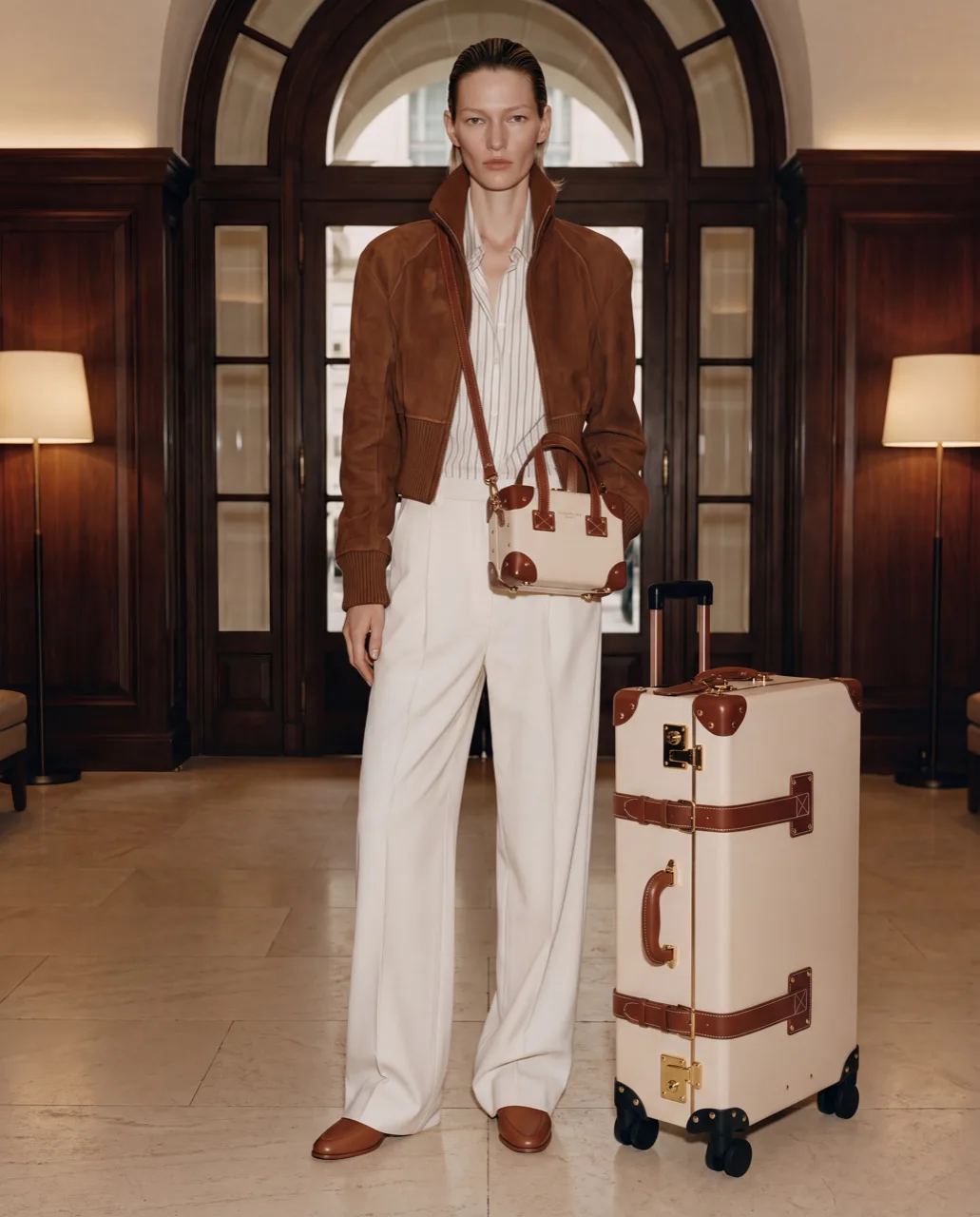
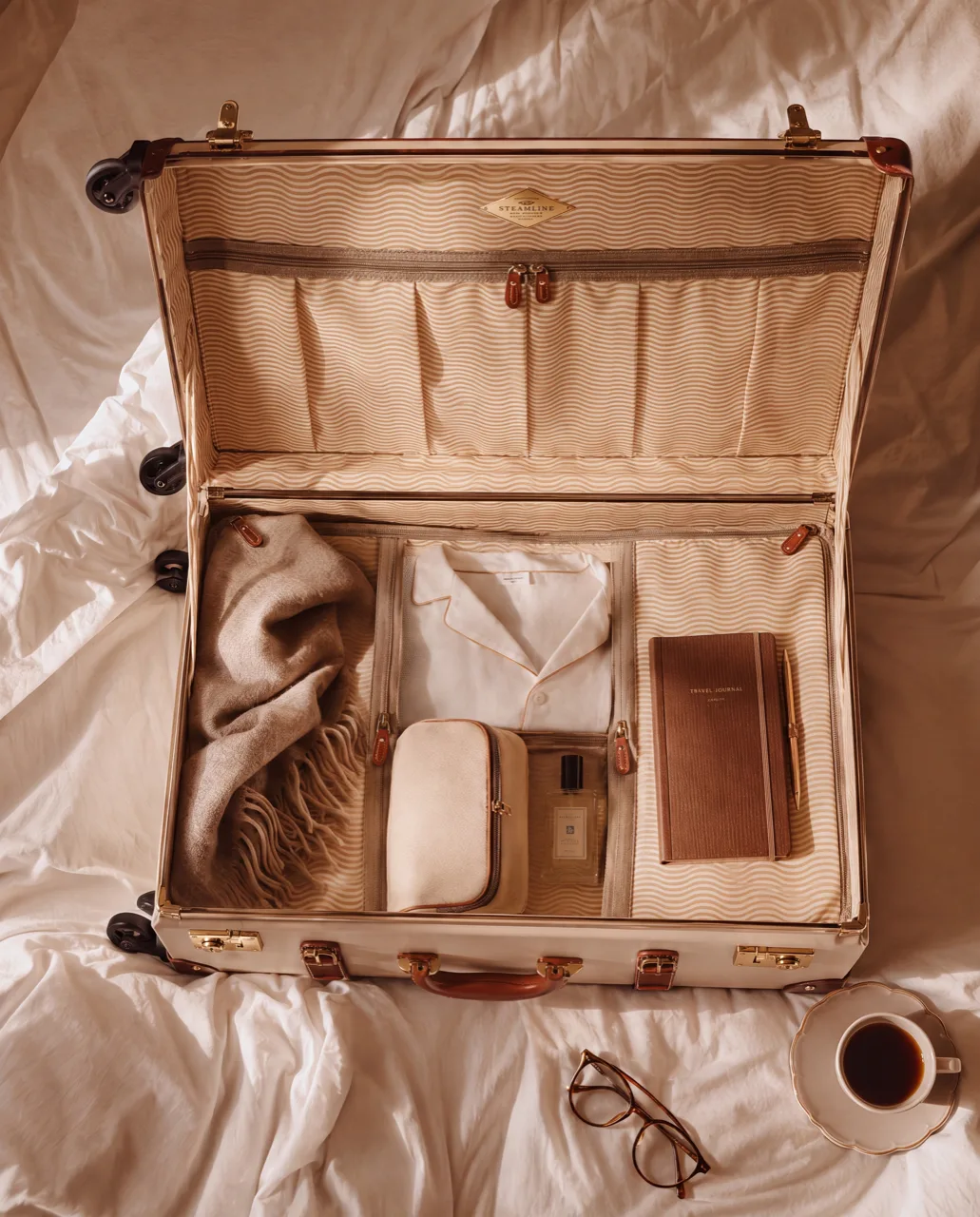
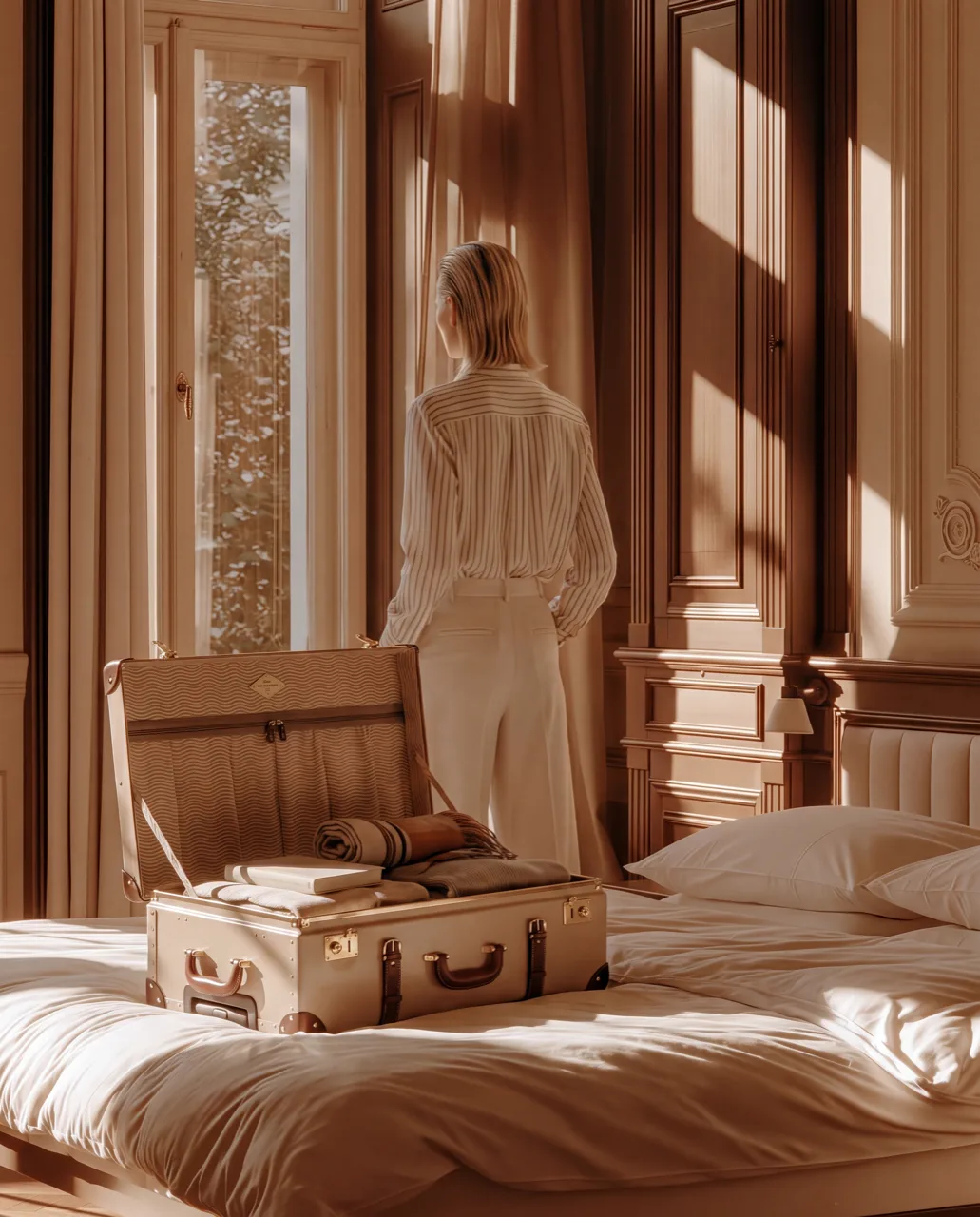
The journey starts in a grand station hall, with low sun slanting through arched windows. Then a first-class dining car, with pleated lamps on white linen and green countryside blurring past the window. Then a hotel lobby panelled in dark wood, and a marble staircase with a brass balustrade, lit from above. One traveller carries the story. She has slicked-back dark blonde hair and a calm, still face, and wears a brown suede bomber, an ivory pinstripe shirt, wide ivory trousers and brown loafers, all in the case's colours. In her room the jacket comes off, and one frame looks straight down into the open case, packed with a fringed scarf, a pyjama shirt, a wash bag, a fragrance and a travel journal.
What was hard
The case could not drift, because a strap in the wrong place or a lock that changes size is the kind of thing a buyer notices. I checked every frame for the details that define it, the straps, the corner caps, the locks and the handle on the side.
The bigger spaces were built empty first. The station hall and the staircase began as scenes with no people and no luggage, with room left on the steps, and the traveller and the case came in afterwards. I fixed the traveller before the scenes as well, in one full-length reference of her in the outfit, and asked for that same woman in every frame. The open case was a test of its own, because the inside has to hold up too, down to the striped lining, the zip pocket in the lid and the gold-tone catches. The main challenge was keeping the case's construction consistent as the viewpoint changed. I refined the proportions, corners and hardware placement against the same product references, so the case remained recognisable across the set while sitting naturally within each scene.