The brief
Sunderly is a piece of AI fashion photography built around a menswear label I invented. Nobody commissioned it. I wanted to see how far styling and the contrast between materials could lift a short wardrobe of classics: a fine knit, a black T-shirt, wide-leg jeans, a leather belt and penny loafers.
The man I had in mind is grounded and sure of himself. His clothes are meant to be mixed, matched and lived in, and he should never look overly styled. I also use the project to show menswear in my portfolio.
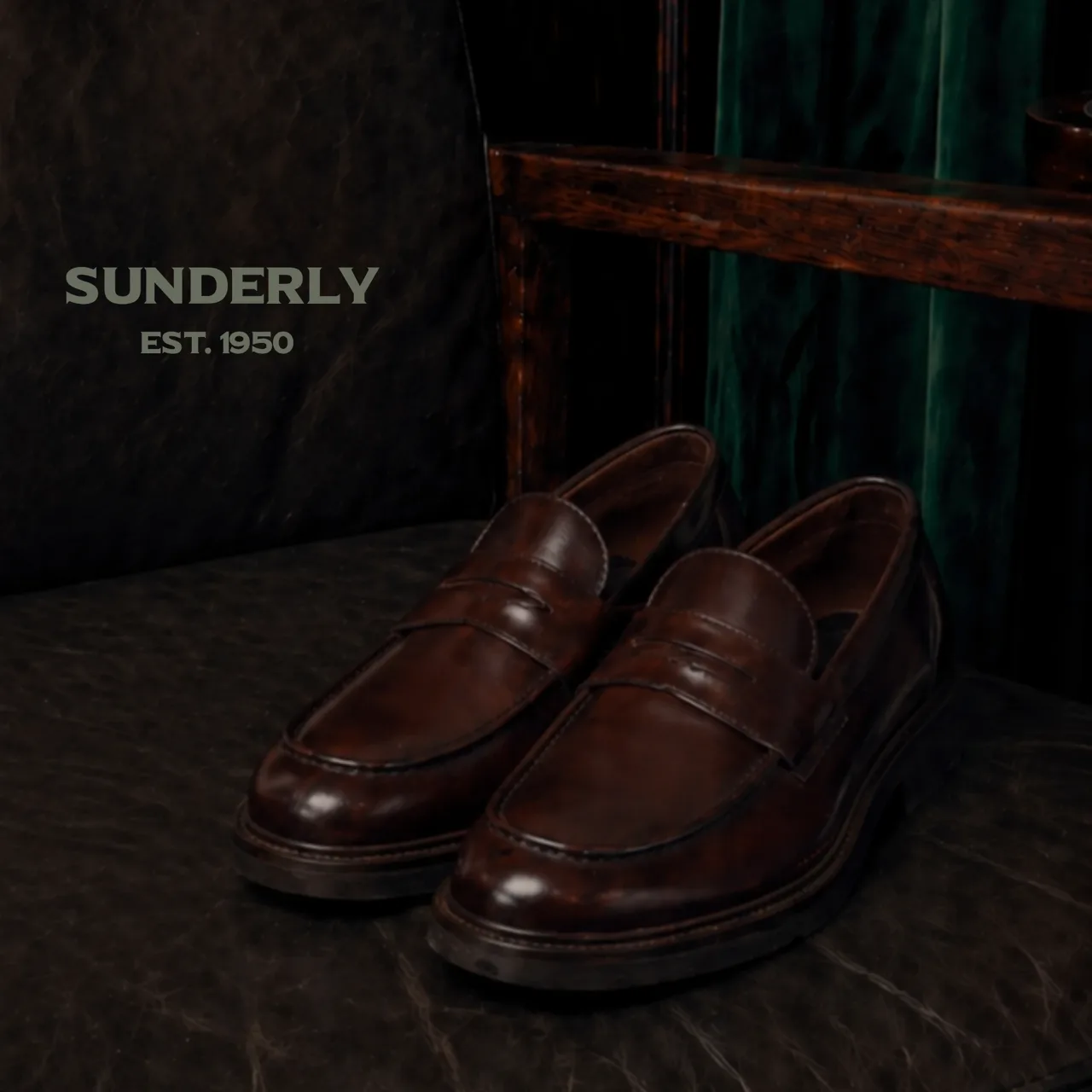
It began in April 2026 under the working title Autumn Essentials and took the name Sunderly later, along with the 'Est. 1950' on the key visual. I imagined Sunderly as a menswear label carrying a family name, with a history built around familiar pieces worn across generations. The 1950 belongs to that invented history and gives the brand the heritage feeling I wanted.
Every frame is made with AI. The set also shows what an AI photoshoot for a clothing brand can look like, with a handful of pieces and one model combined in enough ways to fill a campaign.
The direction
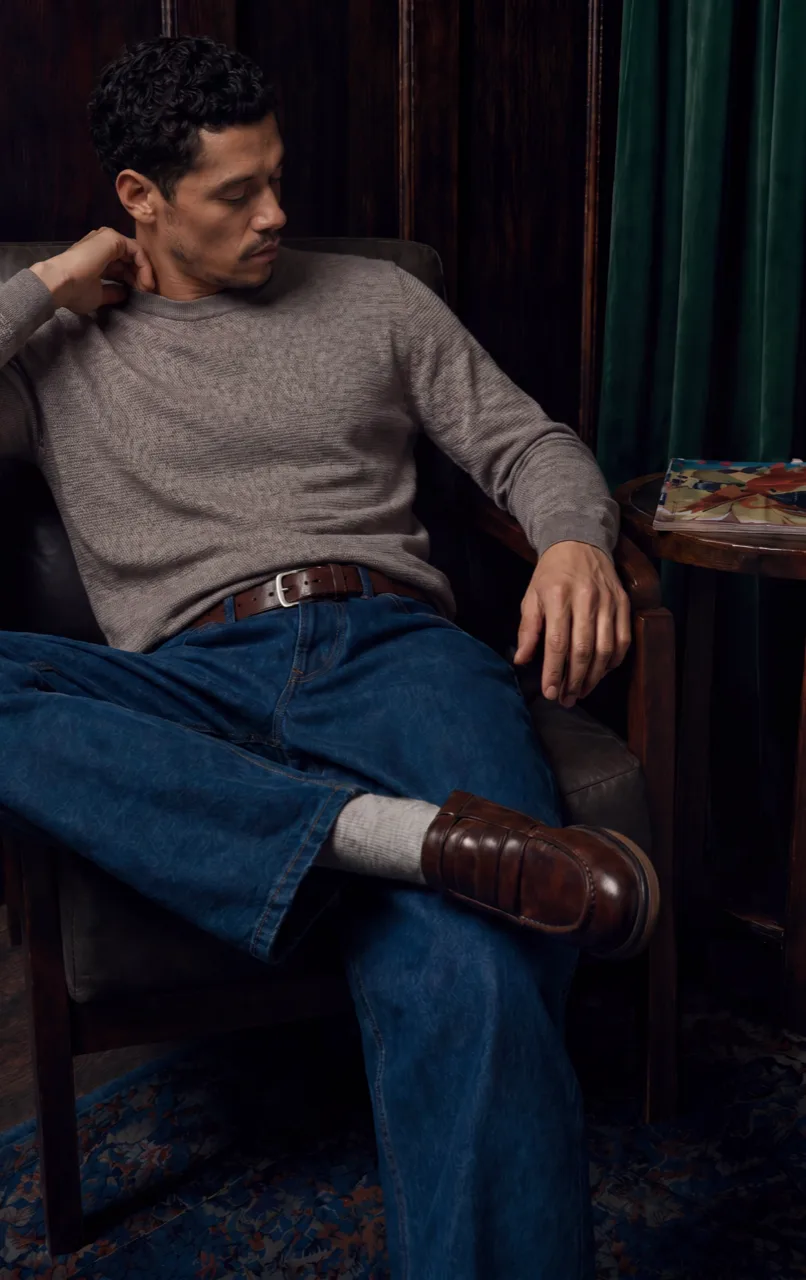
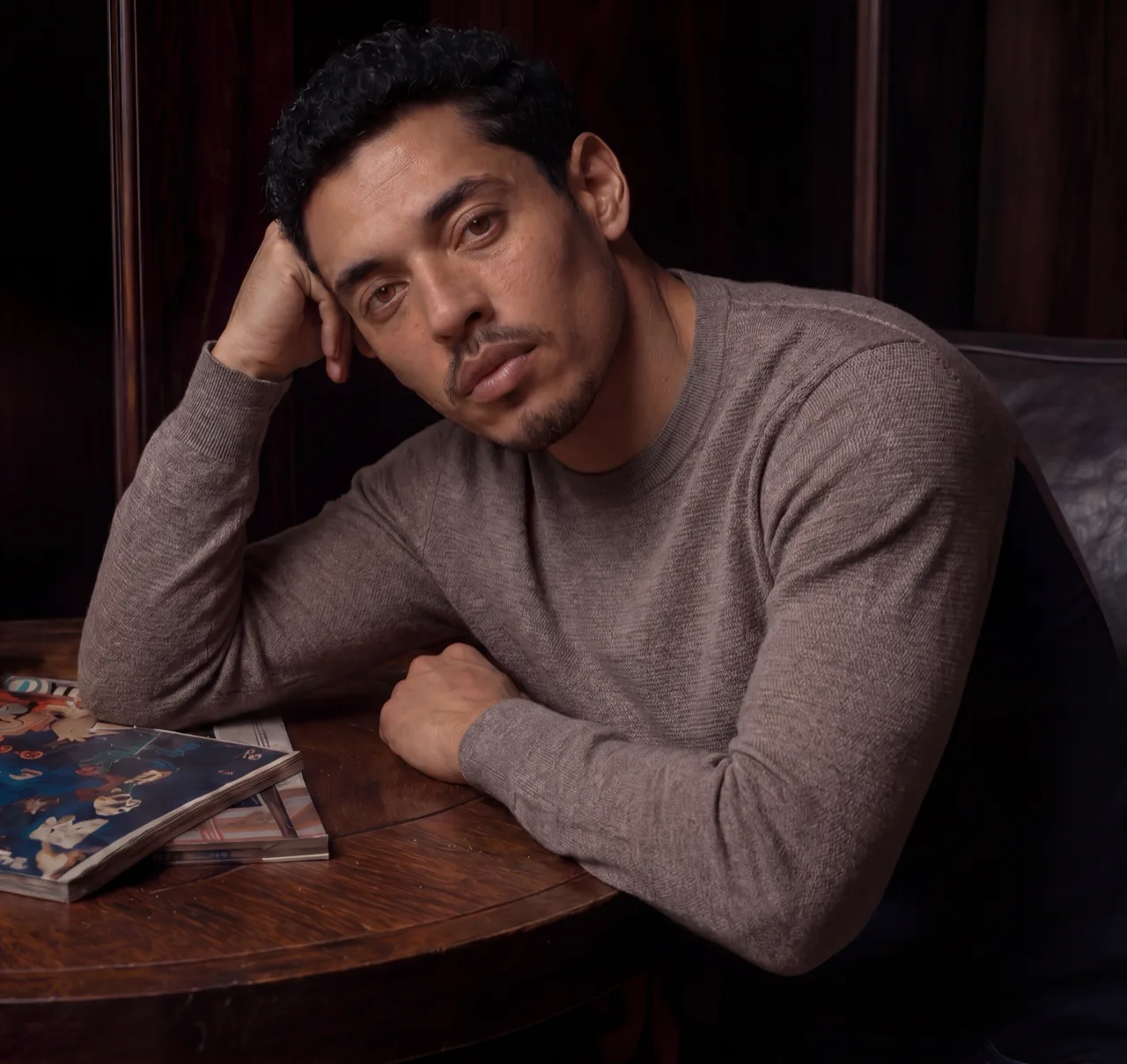
I kept the direction tight, with one dark, wood-panelled room in warm, low light. There is a green velvet curtain, a leather armchair with wooden arms, a small round table of magazines and a patterned rug, and the set moves around the room with him, from the armchair to the floorboards.
The palette stays inside that room, with brown wood and leather, the taupe of the knit, indigo denim and a deep green from the curtain. The light comes in soft and warm, and the corners fall away into shadow.
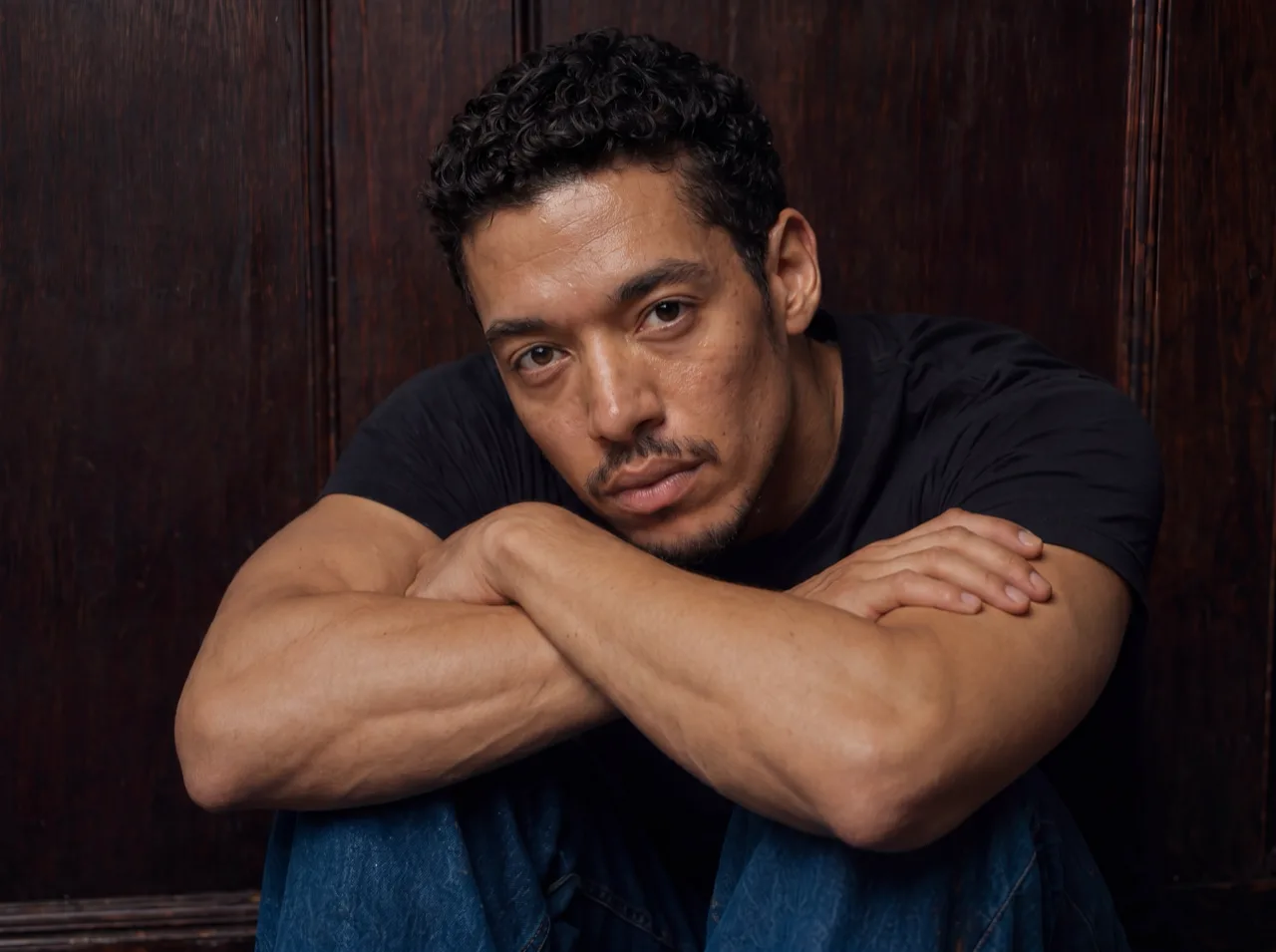
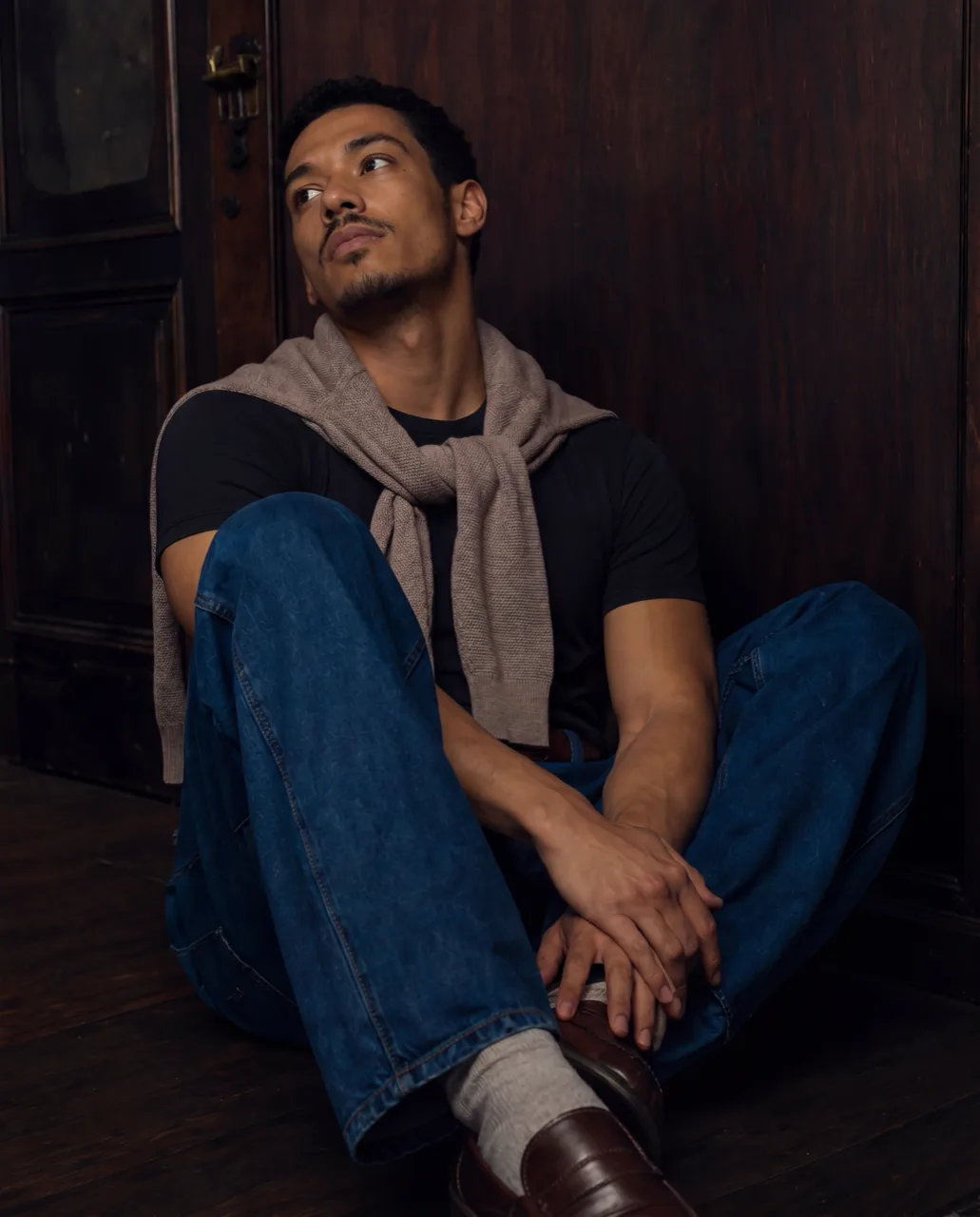
The pieces swap between frames. Sometimes he wears the knit; sometimes it is tied over his shoulders, on top of the black T-shirt. There is one model, with dark curly hair and a short beard, and he stays recognisably the same man throughout.
The key visual leaves him out and shows only his brown penny loafers on the seat of the armchair, with the velvet behind. Because everything happens in one room, even the plain frames belong to the same world.
What was hard
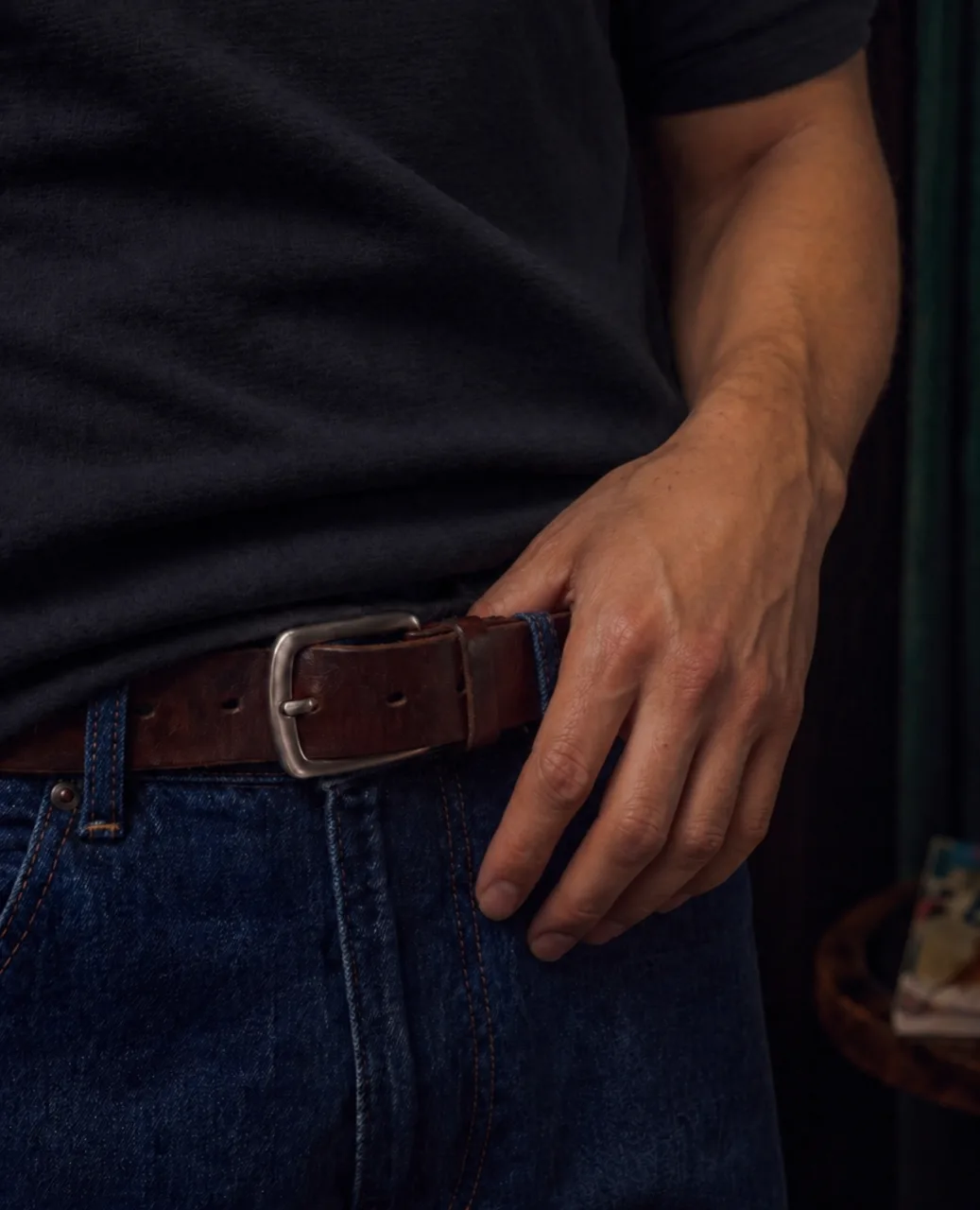
Texture was the hardest part, and it is where AI clothing photography is easiest to judge. Every fabric in the set has a surface you should be able to read up close: the stitch of the knit, the weave and fade of the denim, the creases in a worn belt and the shine on the loafers.
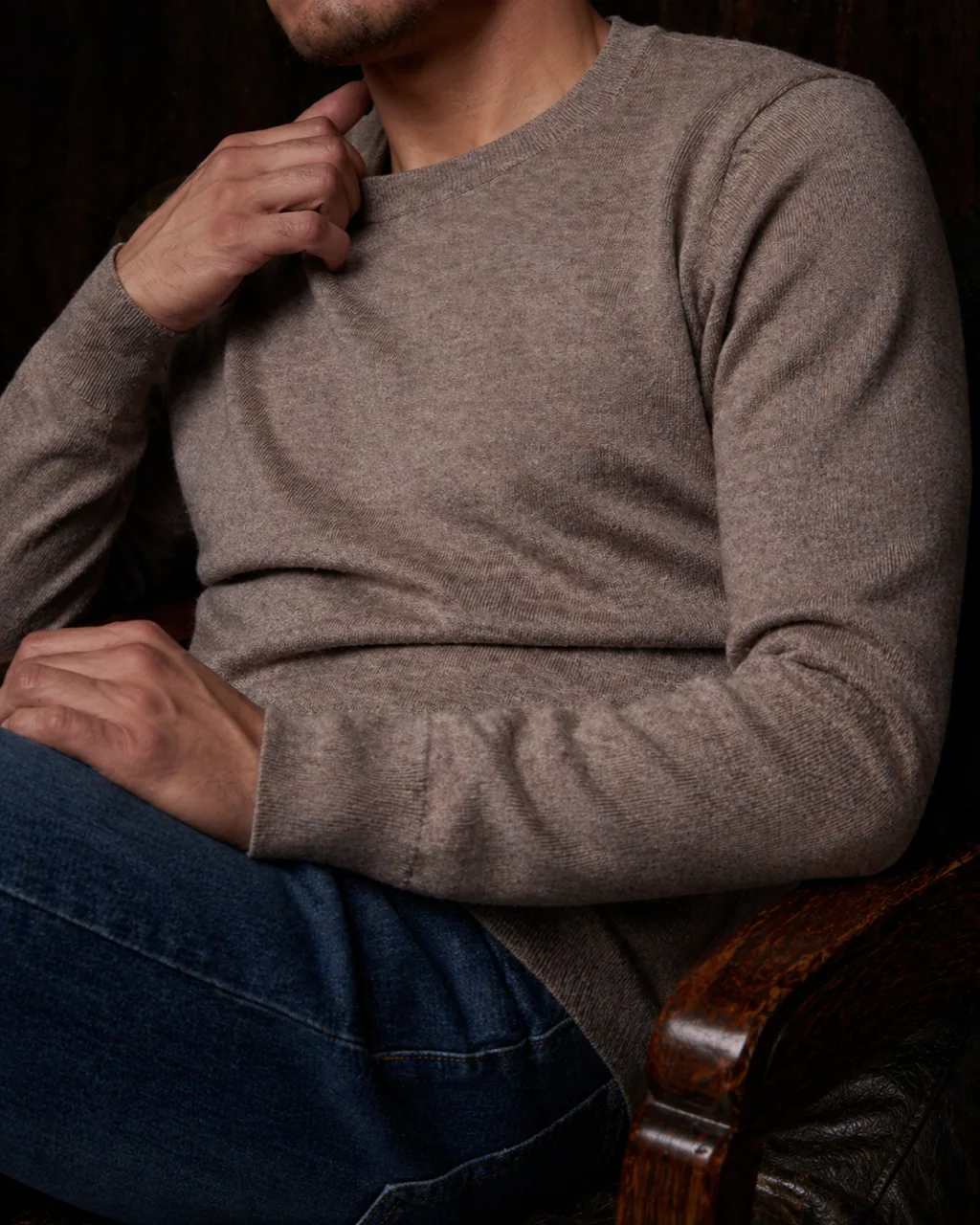
Take the knit. In the close crop you can see the texture of the yarn, and in the wider frames the same knit has to fold at the elbow and sit at the waist as it would on a real body. It also changed more than anything else between rounds. The first drafts had a chunky camel rib; by the final frames it was a fine taupe jumper with a plain crew neck.
Then there is consistency. The same man and the same knit have to come back frame after frame, under the same warm light, or the set stops reading as one campaign. The same jumper had to look like the same material whether he wore it or had it tied over his shoulders, and keeping that continuity across the whole set was the most demanding part. I made far more drafts than the seven frames on this page.