The brief
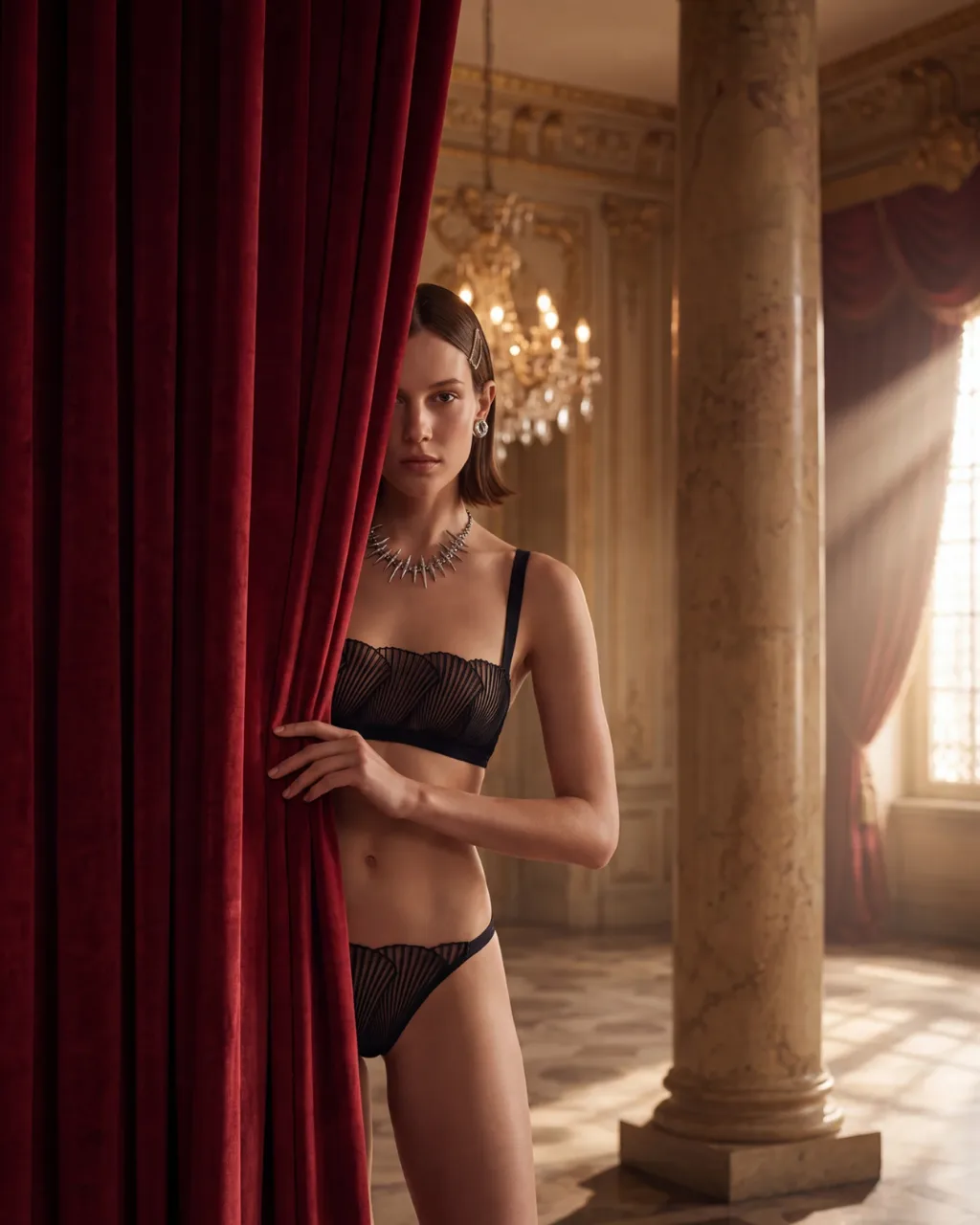
Coco de Mer is a self-initiated lingerie editorial I made with AI. Coco de Mer is not a client and had no part in it. My question was whether AI lingerie campaign photography could give a model enough room to be herself, laughing or half hidden, while the lace stayed exact enough for a buyer to judge it.
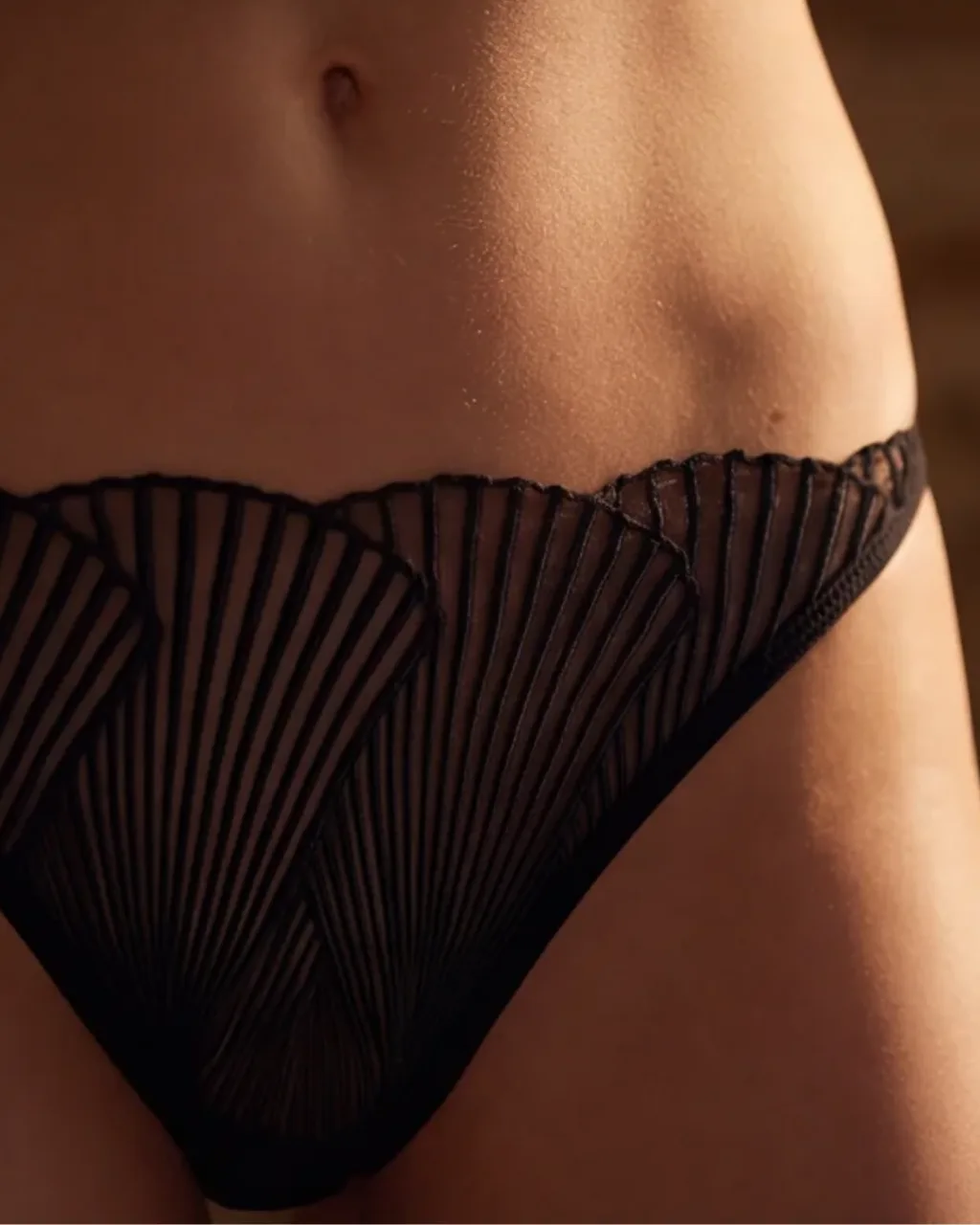
Current AI tools are wary of lingerie, however editorial the intention, so this was also a test of whether a sensual, grown-up set could be made at all. I built it around a single black set, a bra and brief with fan-shaped sheer panels. The images had to move between wide frames, where the room sets the mood, and close frames where the lace can be read. Everything in them, the lingerie, the model and the salon included, is made with AI.
The direction
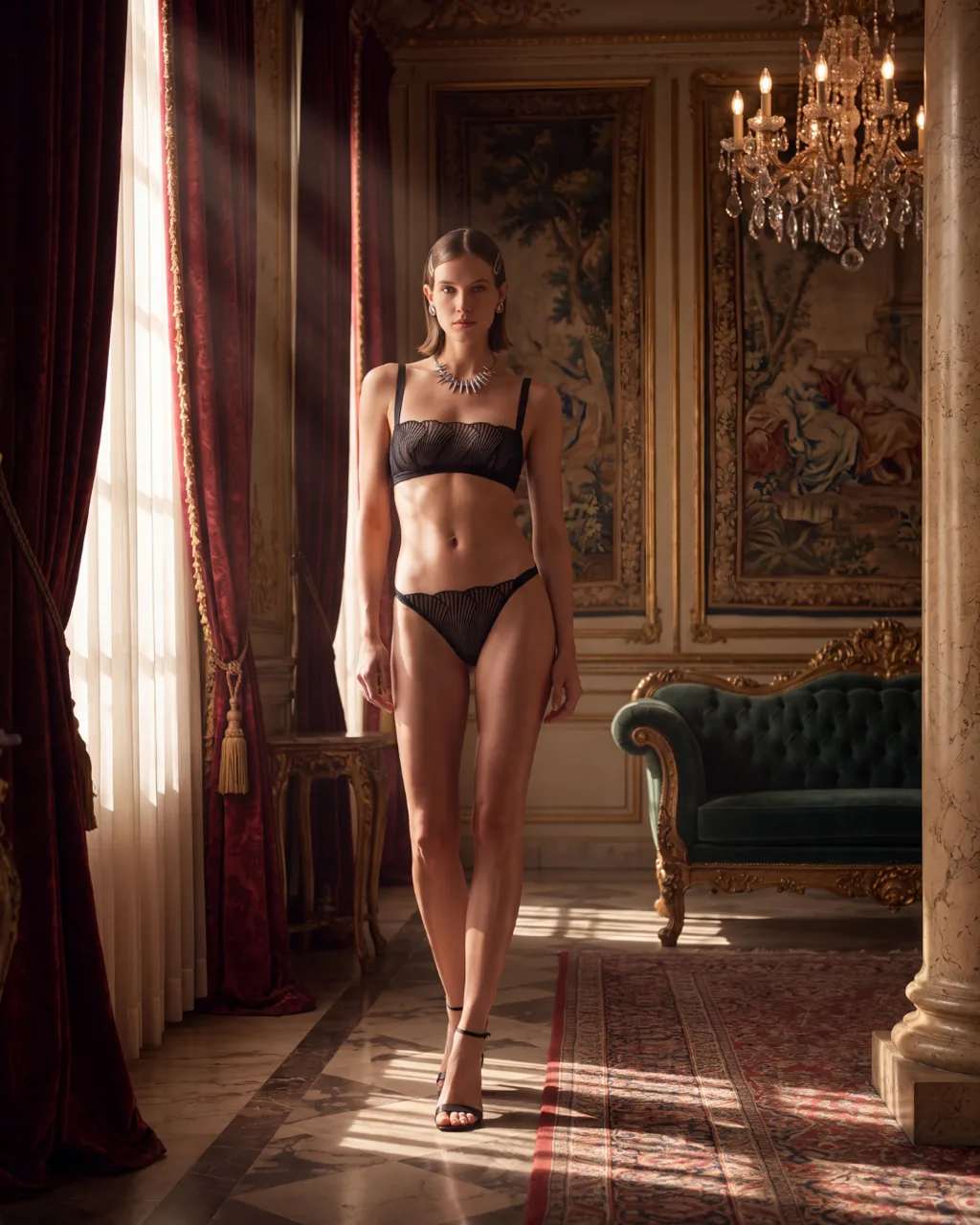
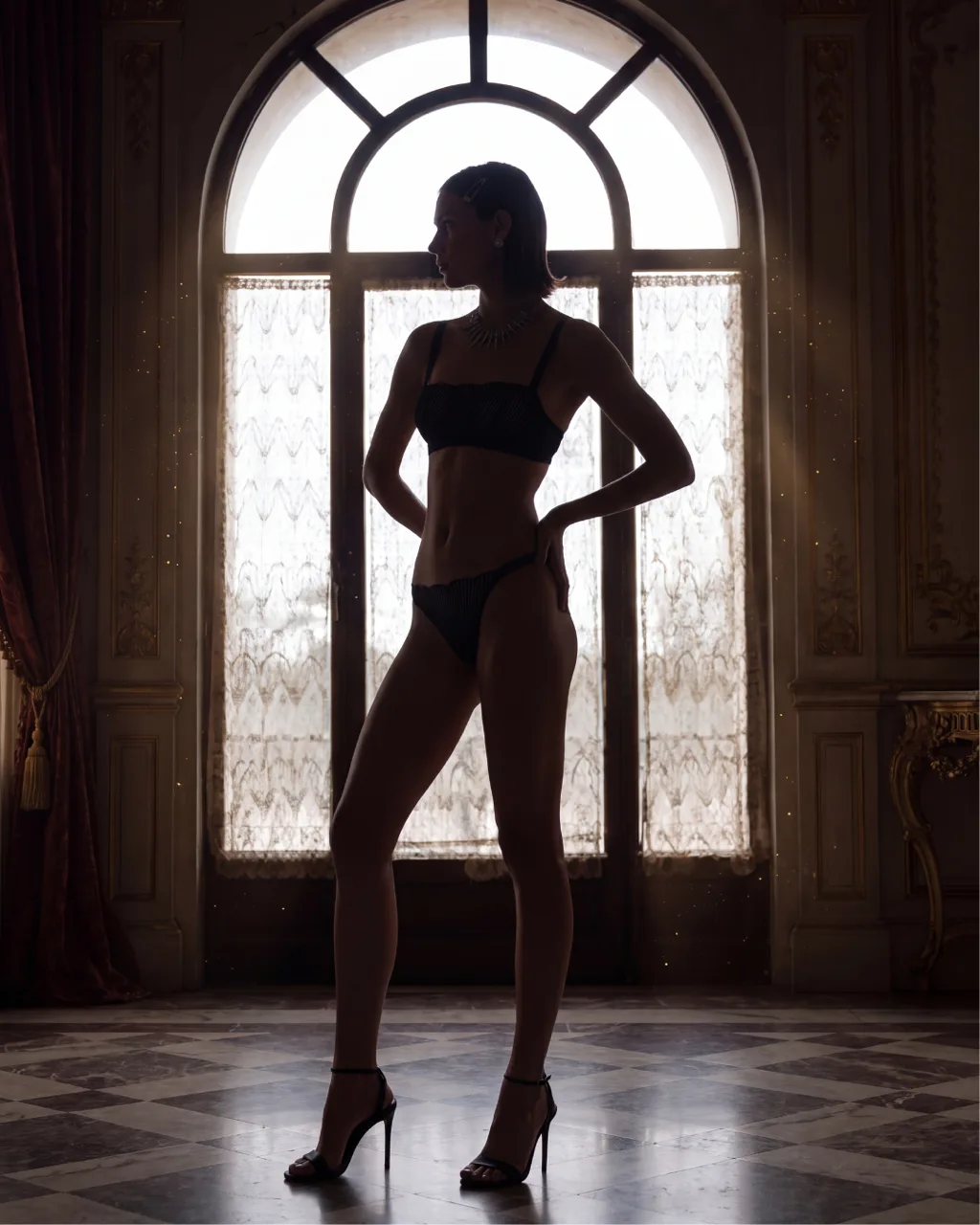
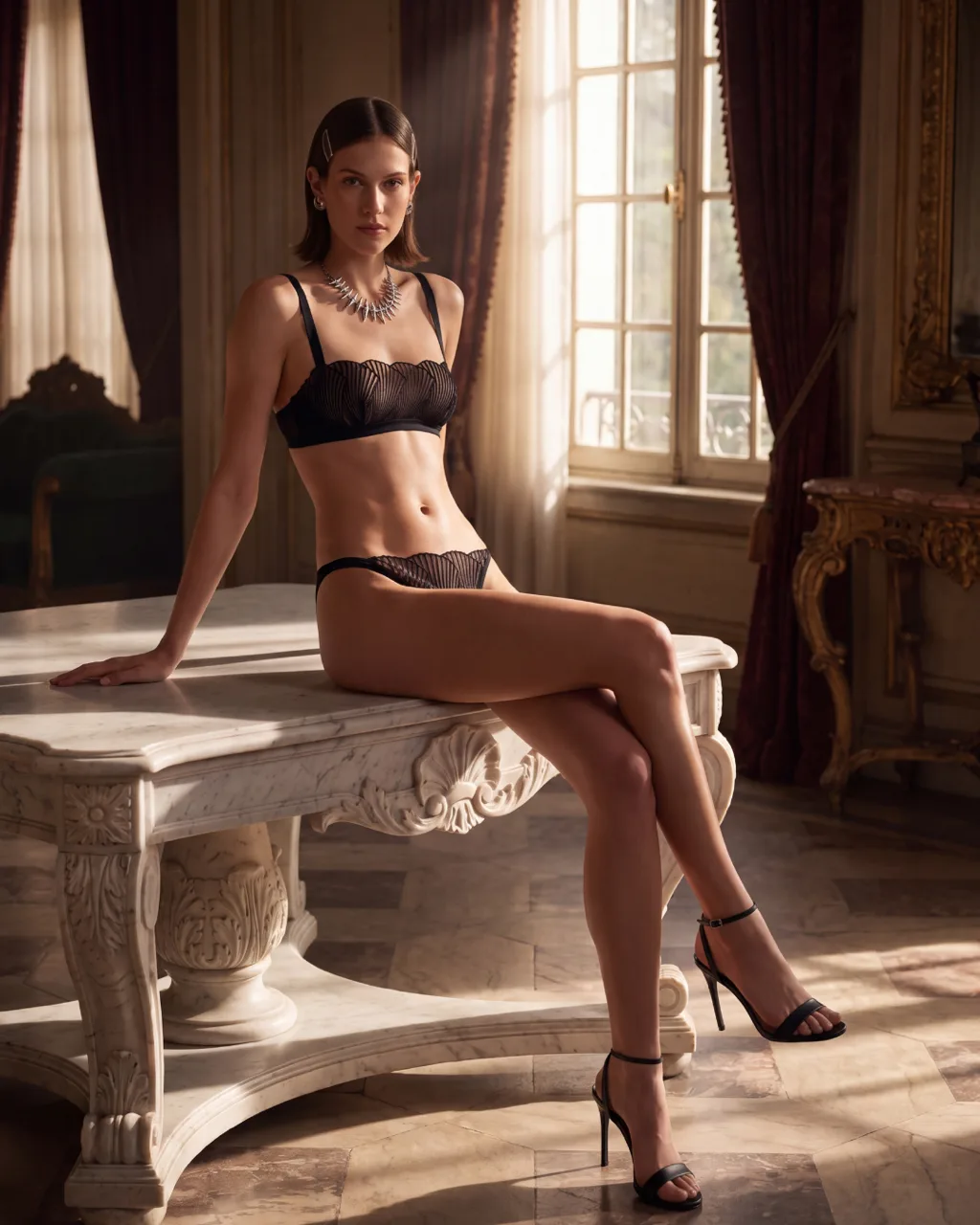
Wide, warm and unhurried was the direction, and the room does half the work. I built a gilded salon with tall windows, a chandelier, tapestries and marble columns, and let low afternoon sun cut across it in shafts. Green velvet, red velvet and gilt give the black lace something rich to sit against.
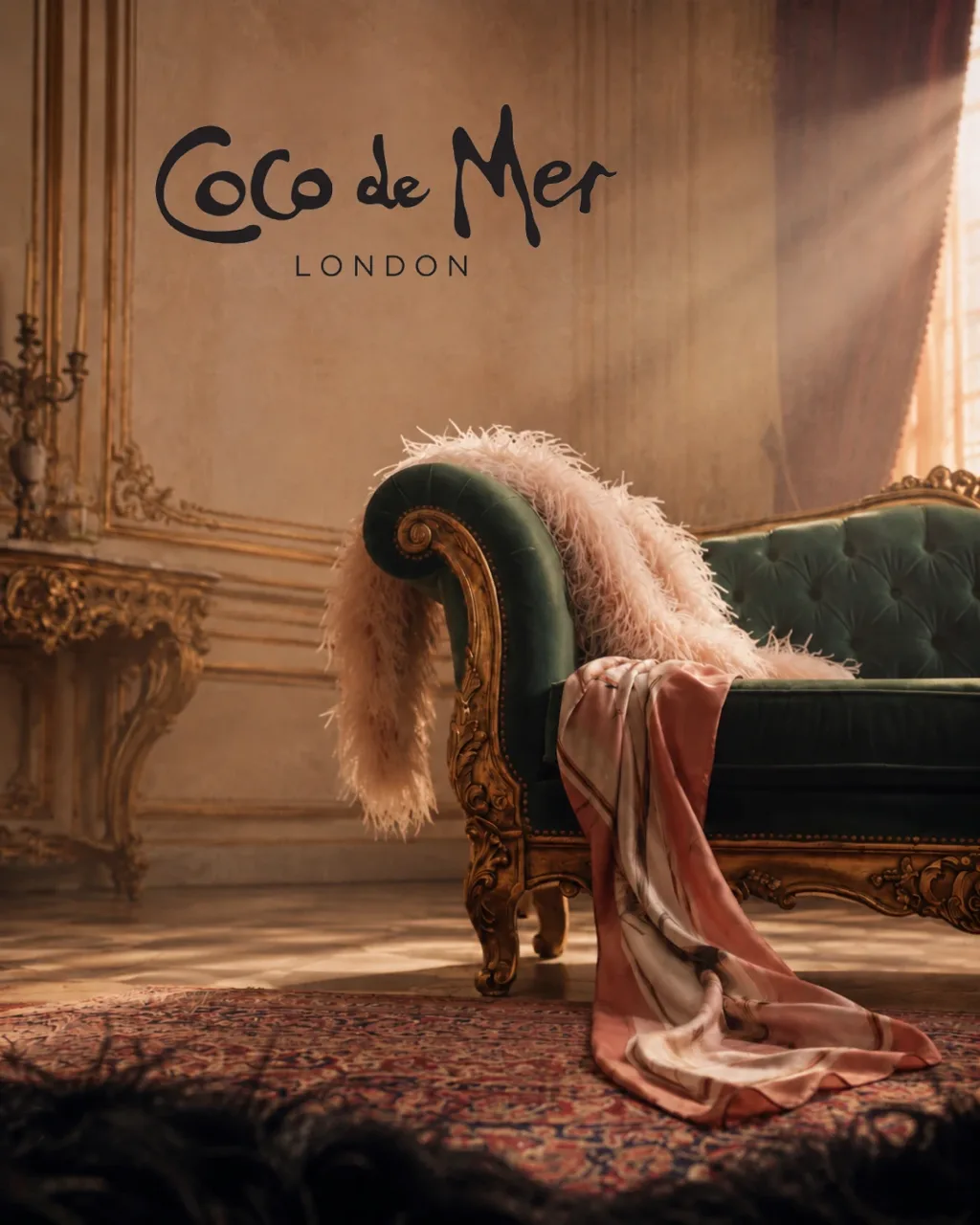
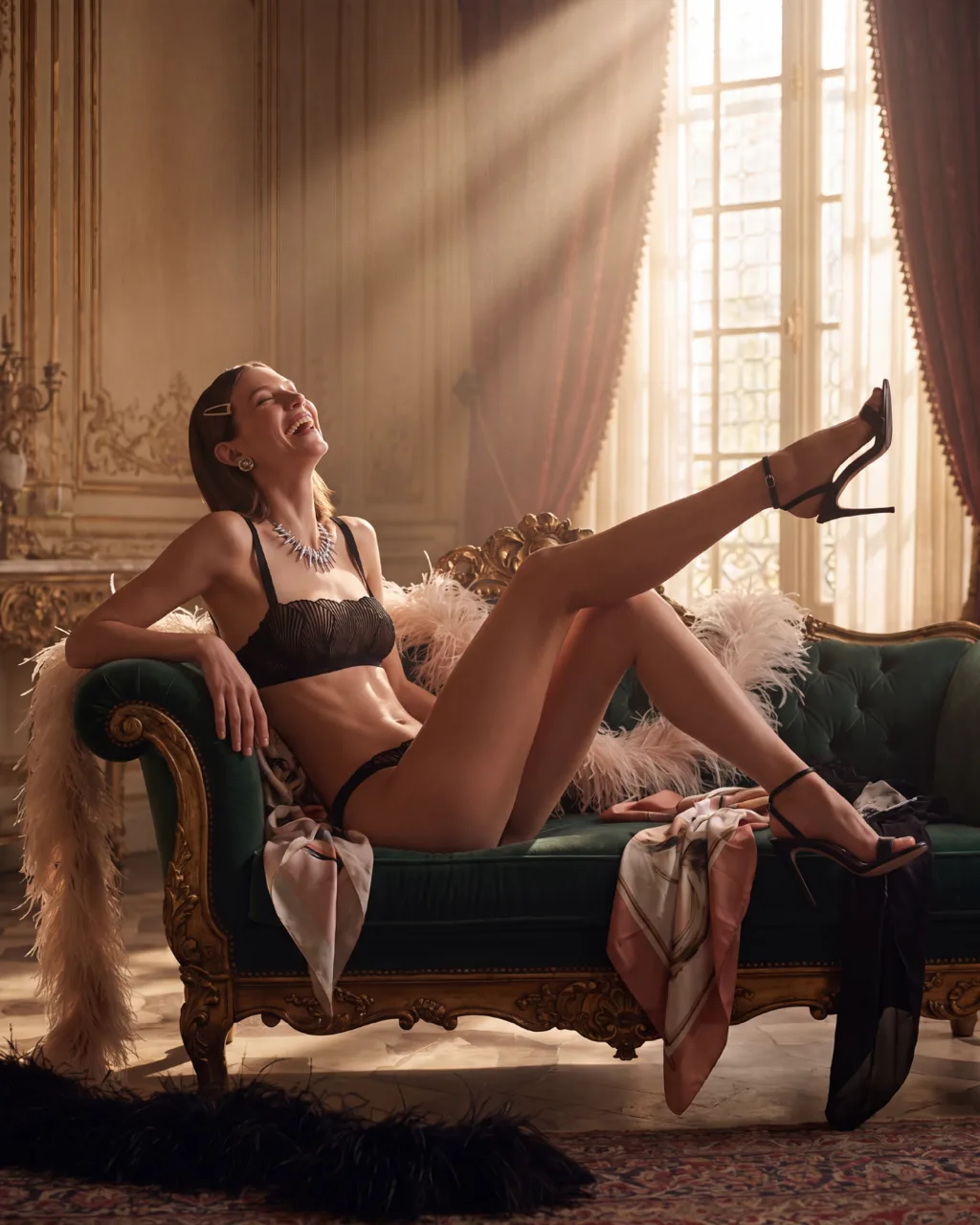
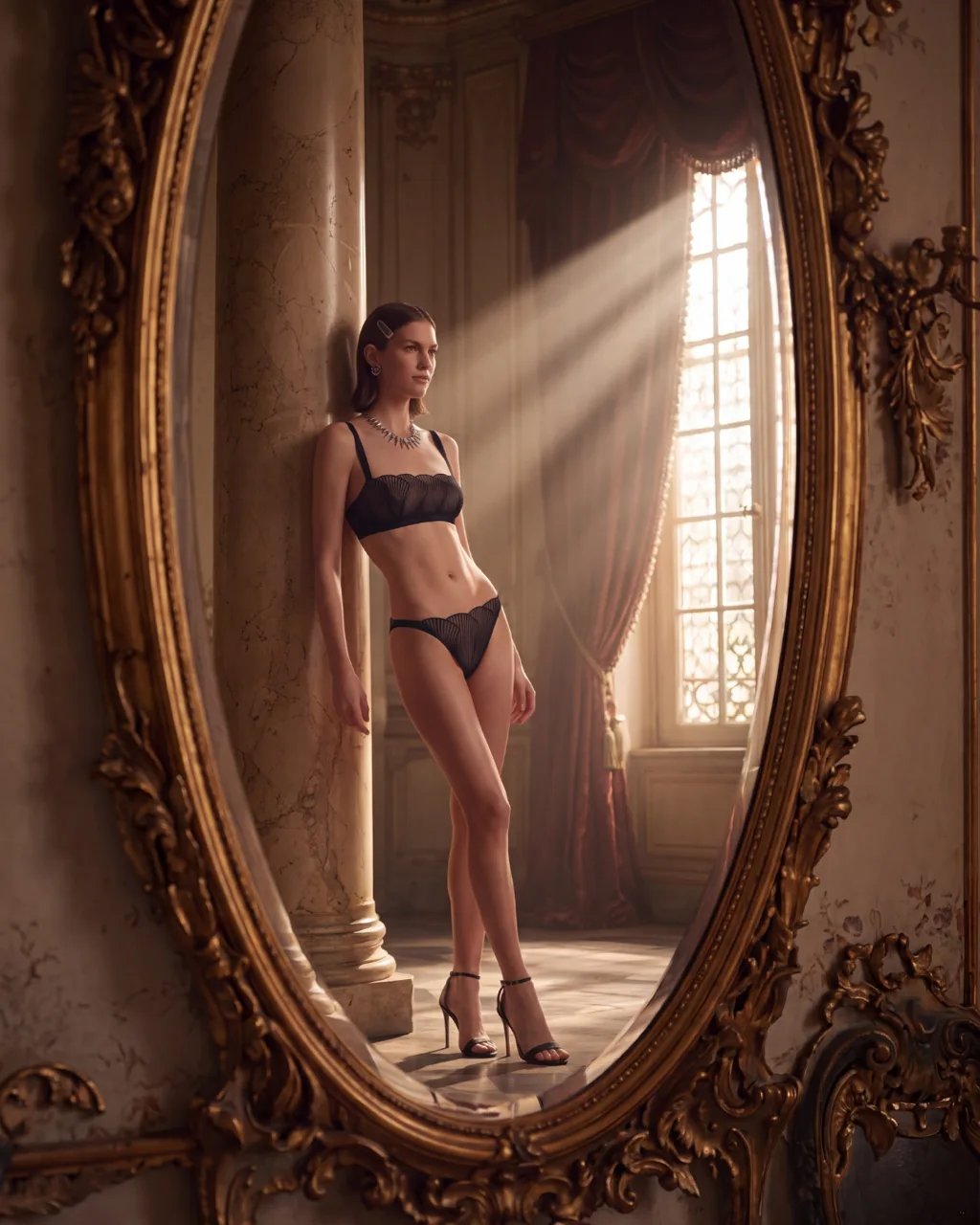
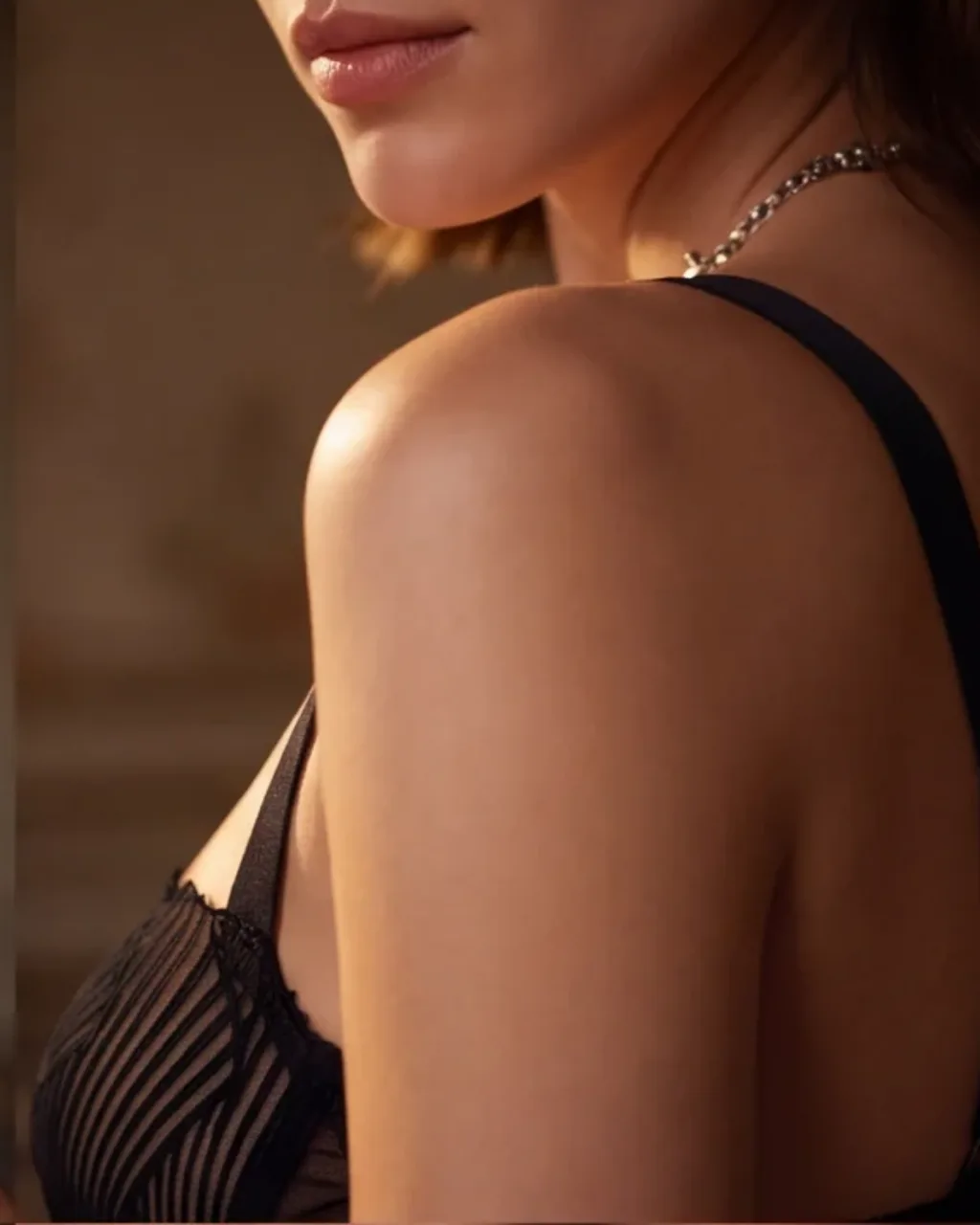
One AI lingerie model appears in every frame except the key visual. Her hair is slicked back, and she wears a jewelled necklace and black strappy heels with the set. She walks in under the chandelier, laughs on a green velvet chaise with a pale feather boa and a silk scarf, catches herself in a gilt mirror and stands as a silhouette in the arched window. Then the camera moves in, to the lace against her hip and a strap on her shoulder in window light, before she half hides behind a red curtain. The key visual is the empty chaise, with the boa and the silk draped over it.
What was hard
The lace was the detail I watched most closely. Its panels are made of fine lines fanning out to a scalloped edge, and in AI fashion photography a pattern like that drifts easily, with lines merging, changing direction or losing their spacing from one frame to the next. It had to hold on the bra and the brief, at full length and in the macro, and the scalloped edge had to sit on the skin the way a real garment does.
Through the sheer parts the skin had to read as skin, warm and textured, not as a flat dark fill. The necklace had to stay the same piece throughout. Before building the salon, I made a plain full-length reference of the model wearing the set, on a white background. Lingerie is a challenging category because image-generation tools can restrict even commercial fashion imagery. I used my established workflows, combining consistent garment references with controlled iterations and selective retouching to preserve the lace pattern, strap placement and fit. The main challenge was maintaining those details across changing poses throughout the set.