The brief
This study was a test of skincare product photography for something worn on the face and meant to be seen. Starface makes star-shaped pimple patches. I wanted to treat them as styling, the way you would wear an accessory, without losing what they are for.
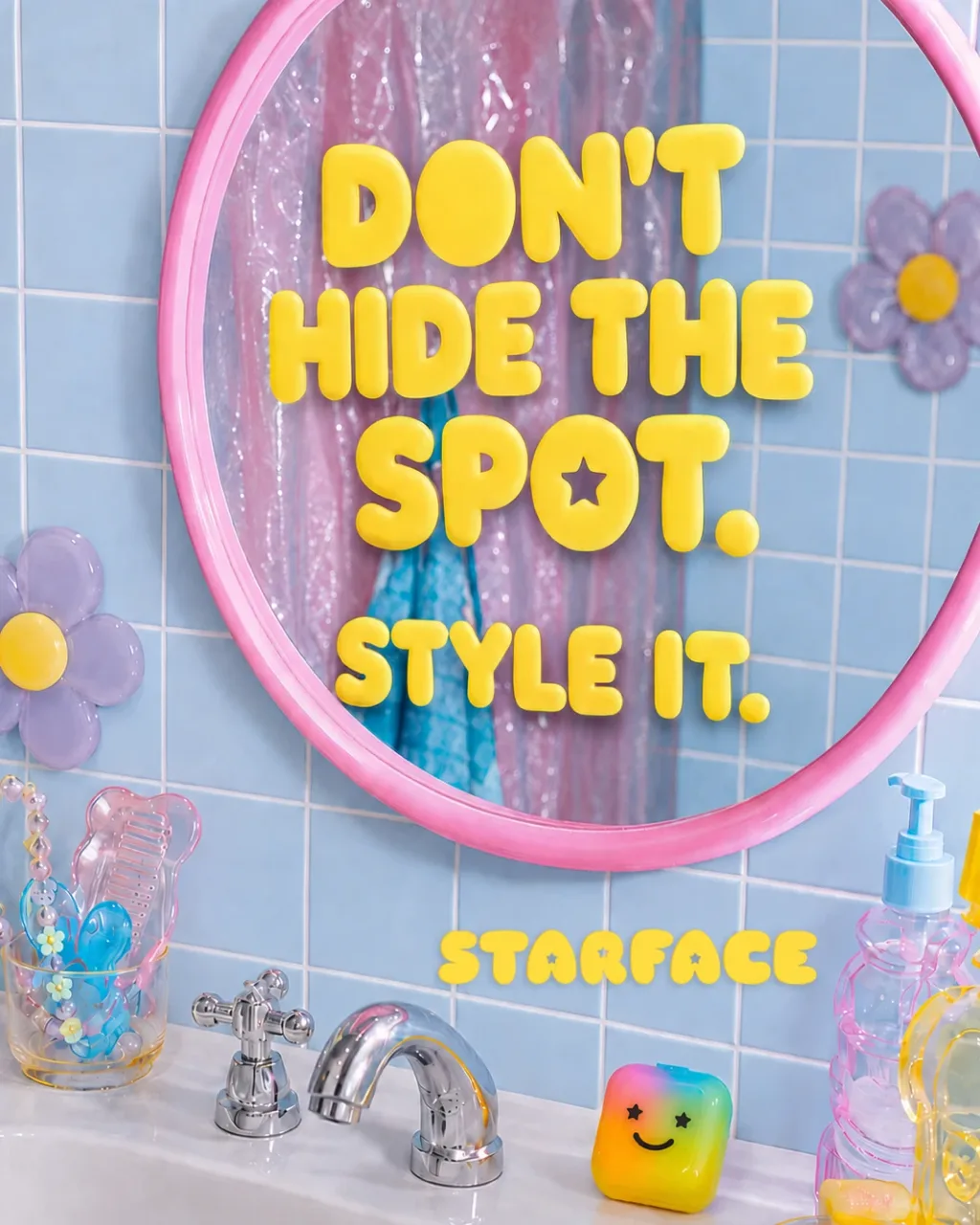
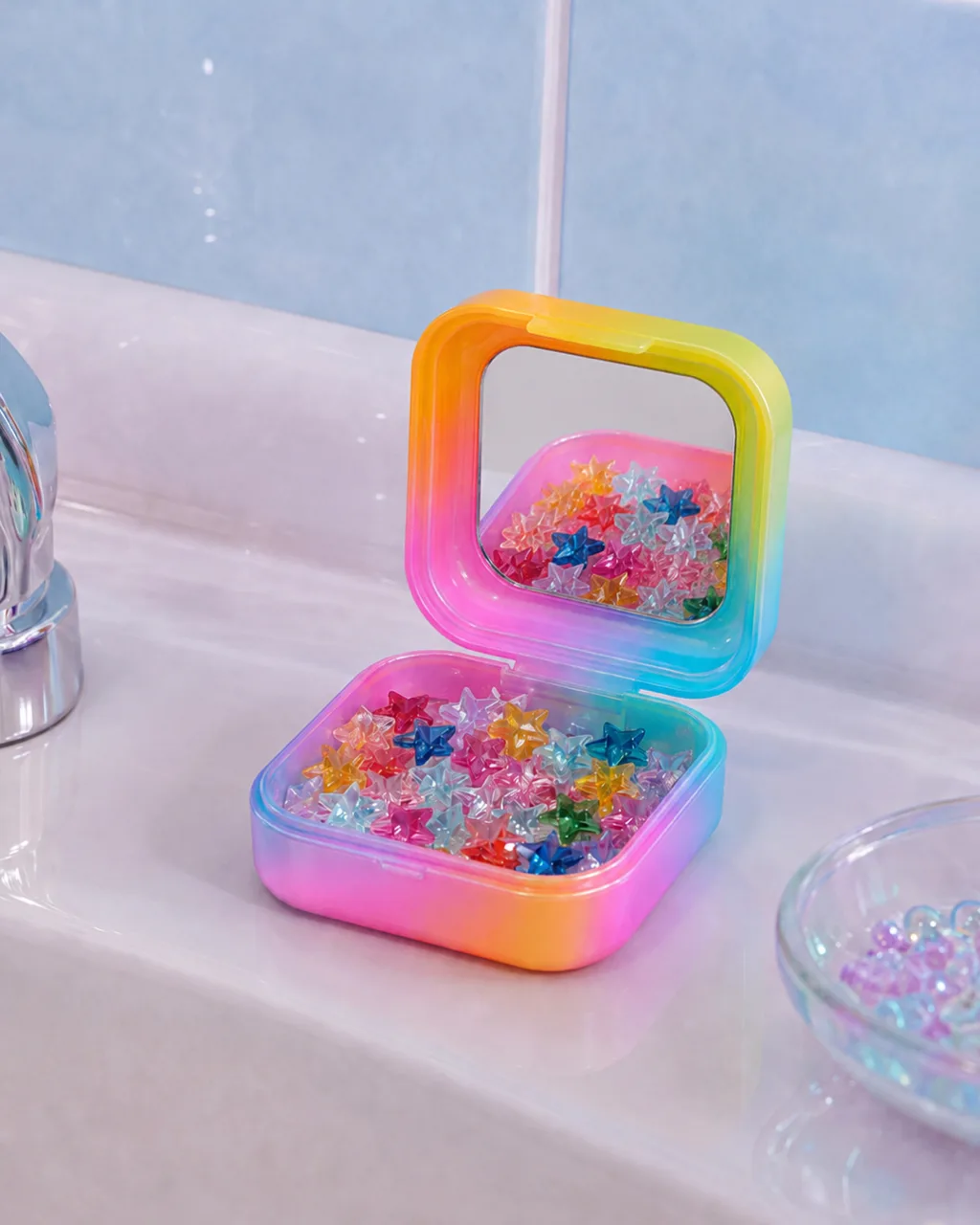
The key visual carries the line that sums up the brief, "Don't hide the spot. Style it." In four of the six frames the patches are on skin, so the set stands or falls on how they sit there. The other two hold the product and the world around it, a rainbow compact of stars on the sink and the line on the bathroom mirror.
It is a self-initiated concept, made with AI. Starface is not a client and did not commission it.
The direction
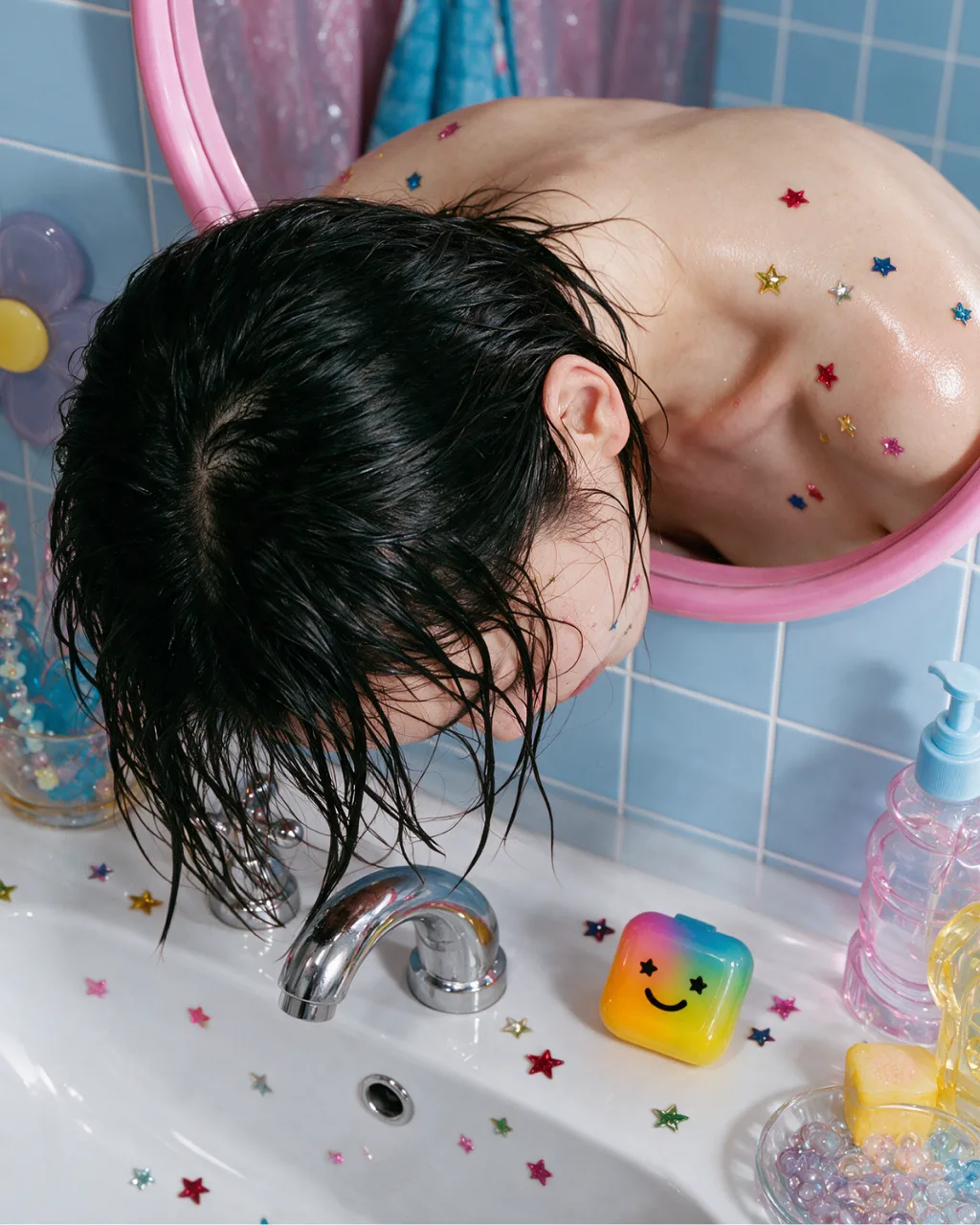
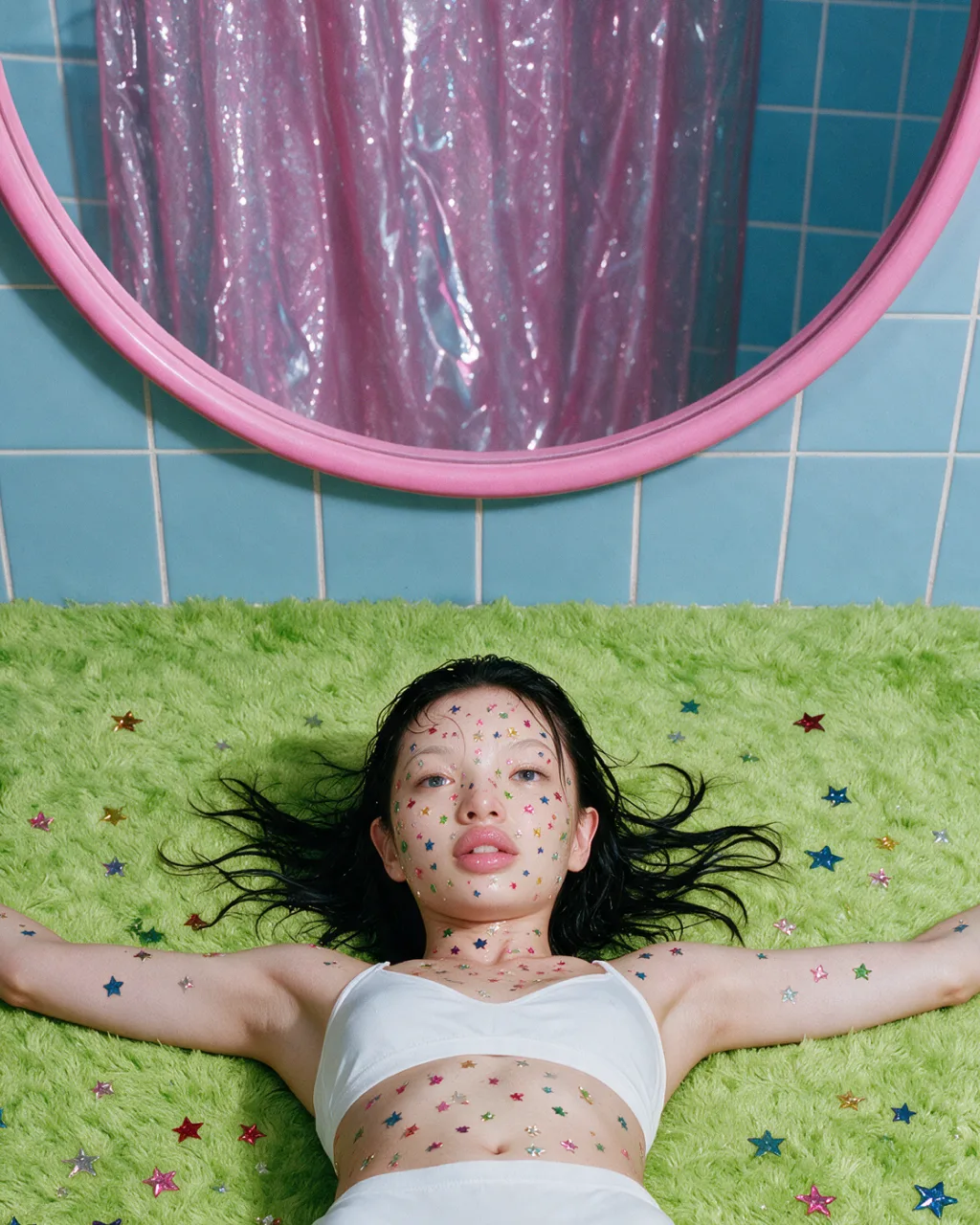
I set the campaign in a pastel bathroom and kept the framing close. The room has pale blue tiles, a round bubblegum-pink mirror, an iridescent shower curtain and lilac flowers on the wall, with a yellow smiley cube and clear plastic bottles on the sink. There is also a grass-green shaggy rug, and two frames look straight down onto it.
I used photographs of real people wearing stickers and small gems to study how they sit on skin, follow facial contours and catch the light. The first drafts were cooler, with wet hair against a pale blue wall and a single crystal on the cheek, and the early faces mixed hearts, drops and round gems in with the stars. By the finished set the colour had gone pastel and every patch was a star.
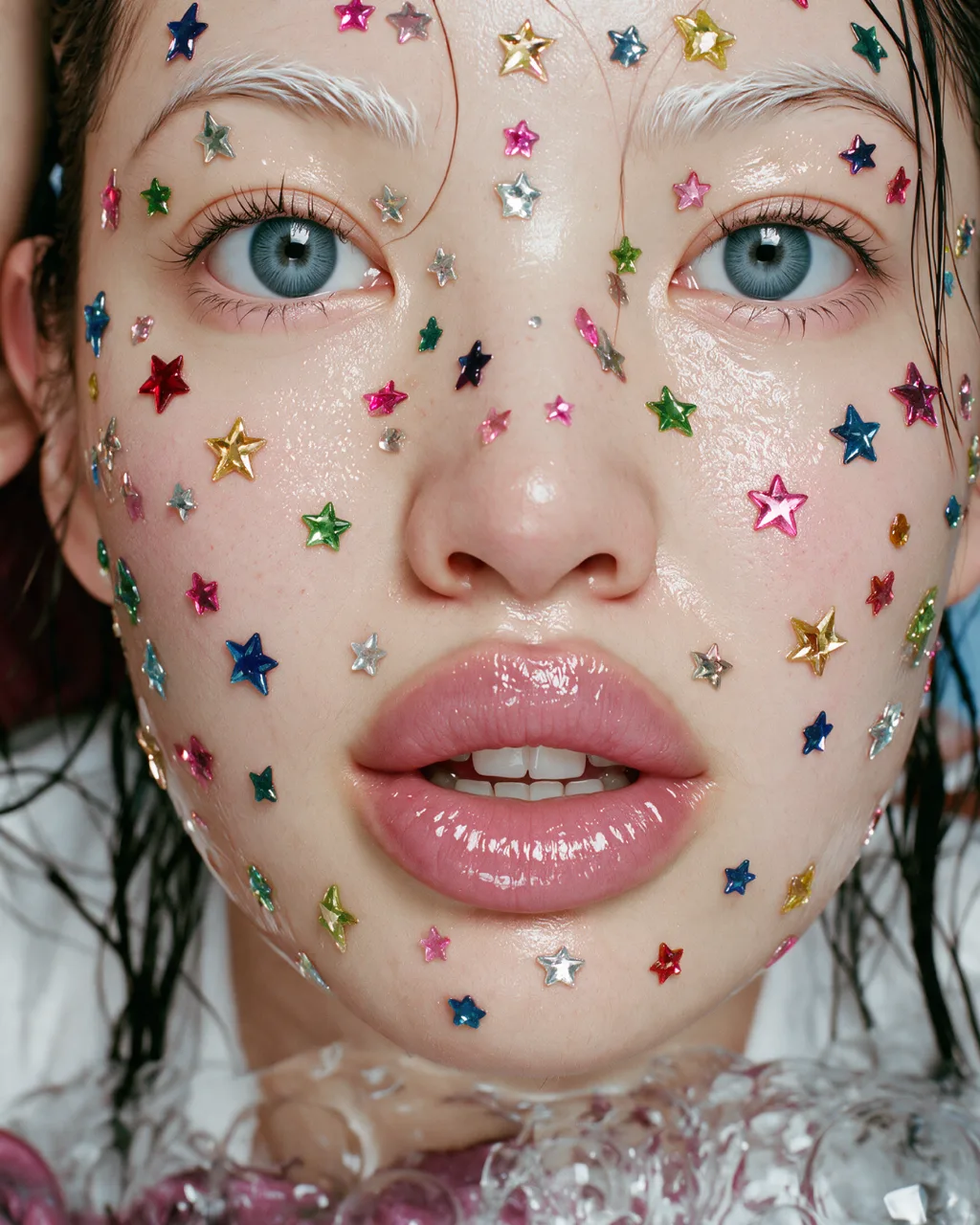
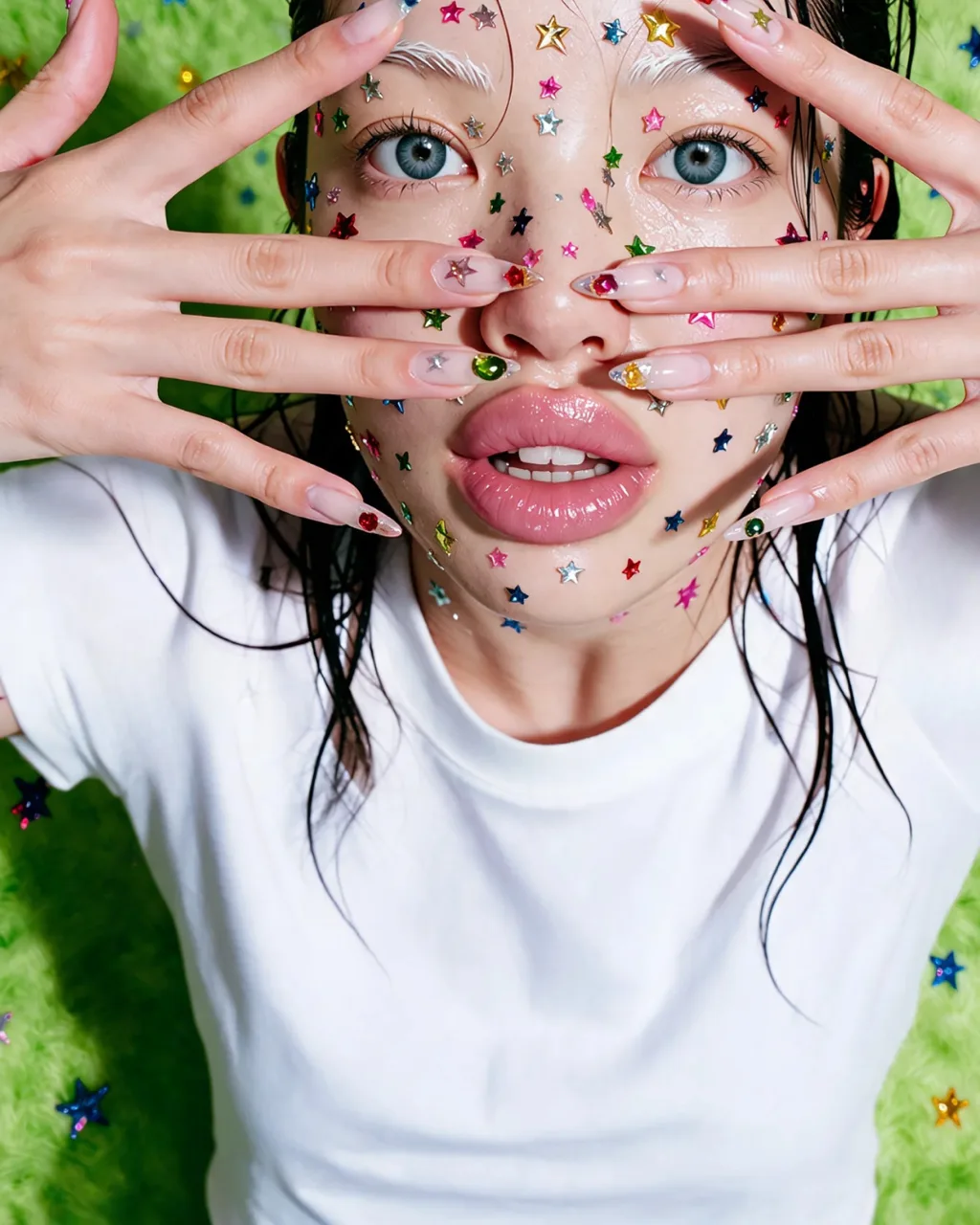
There is one model across the set, with wet black hair and bleached brows. She wears plain white, so the colour comes from the stars and from her decorated nails.
What was hard
In AI beauty product photography, product on skin is the hardest shot to get right, and here it is most of the set. Each star had to follow the shape of the skin under it and still look like the same product from frame to frame. The scale swings a long way, from the macro, where her face fills the picture, to the rug, where the stars run from her face down onto the rug around her.
The stars are glossy and faceted, so every one catches the light, and the skin around them had to stay skin. Plastic-looking skin is one of the things I won't make, and a macro of a face covered in stars is where it would show first. The hands frame adds long decorated nails across the face, and hands are another detail I never leave broken. The stars were generated within the images, and I kept refining them until they sat naturally on the skin and followed the contours of the face. The frame of her lying on the grass-green rug took the most attempts, particularly getting the white lingerie to look right within the pose.