
The brief
I made Meta Starfire to test AI product photography with models on the accessory that sits closest to the eye. I wanted to see whether one generated model could carry a full eyewear set, from the glasses on their own to a full-length look, and still read as a single shoot.
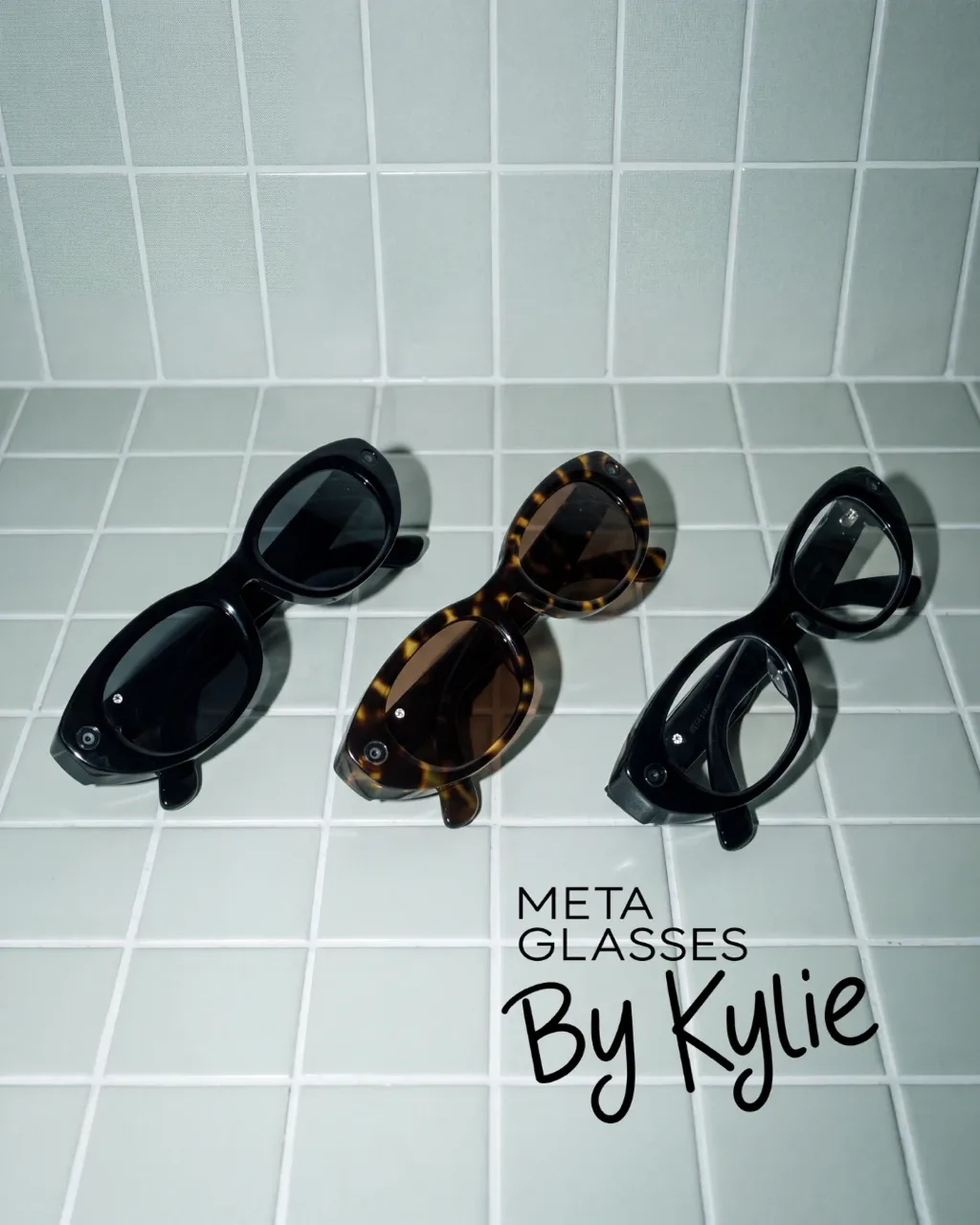
The Starfire smart glasses are a real product from Meta's collaboration with Kylie Jenner. The campaign is my own concept study, and Meta did not commission it. The glasses have a cat-eye shape with a small camera built in, and I worked with three versions, black with dark lenses, tortoiseshell with brown lenses, and black with clear lenses. Eyewear is a demanding test for this way of working, because the product and the face have to agree in every frame. The model is generated and was cast for this set. She is not a real person, so there was no likeness to clear. I deliberately chose a generated model rather than using Kylie Jenner's likeness.
The direction
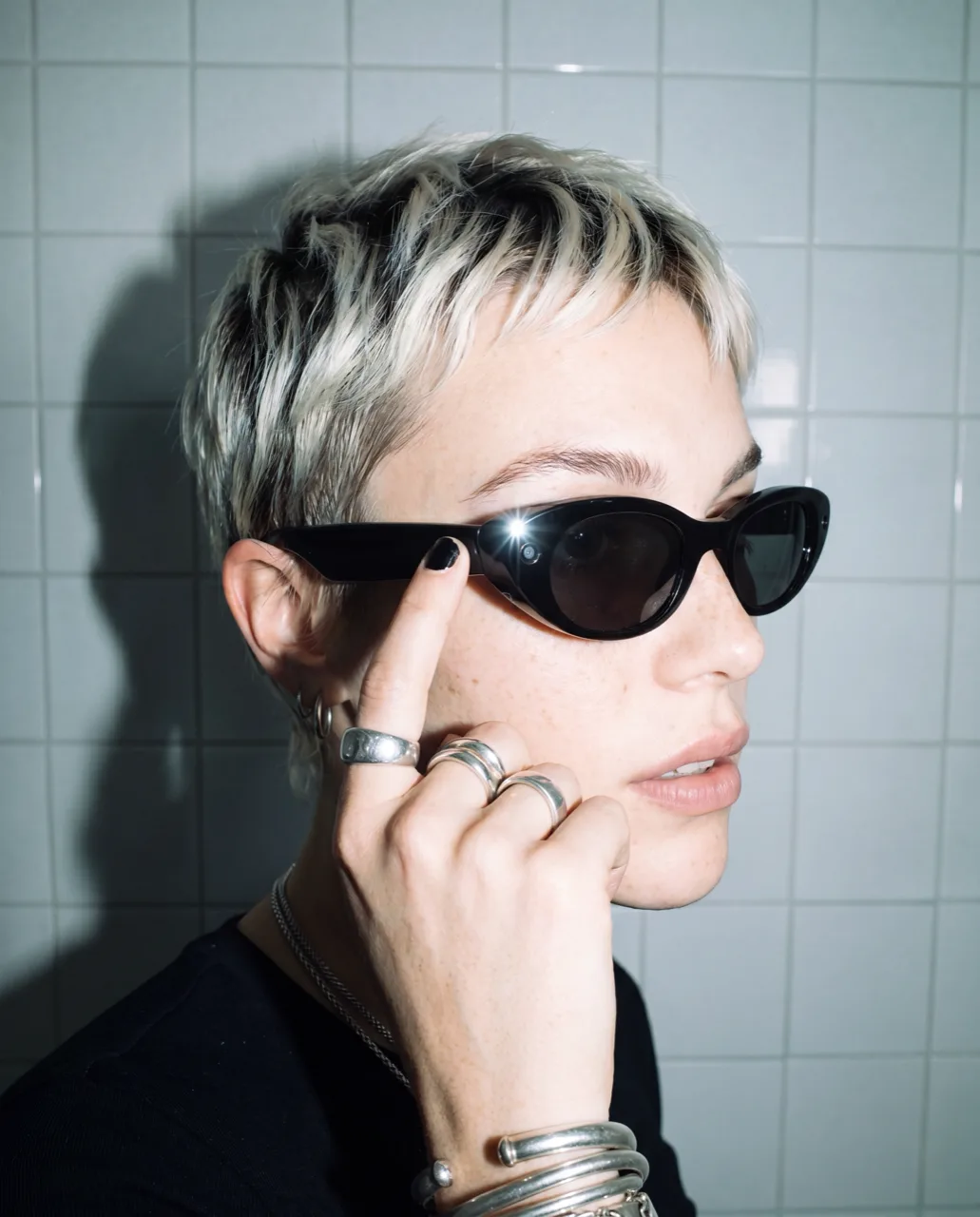
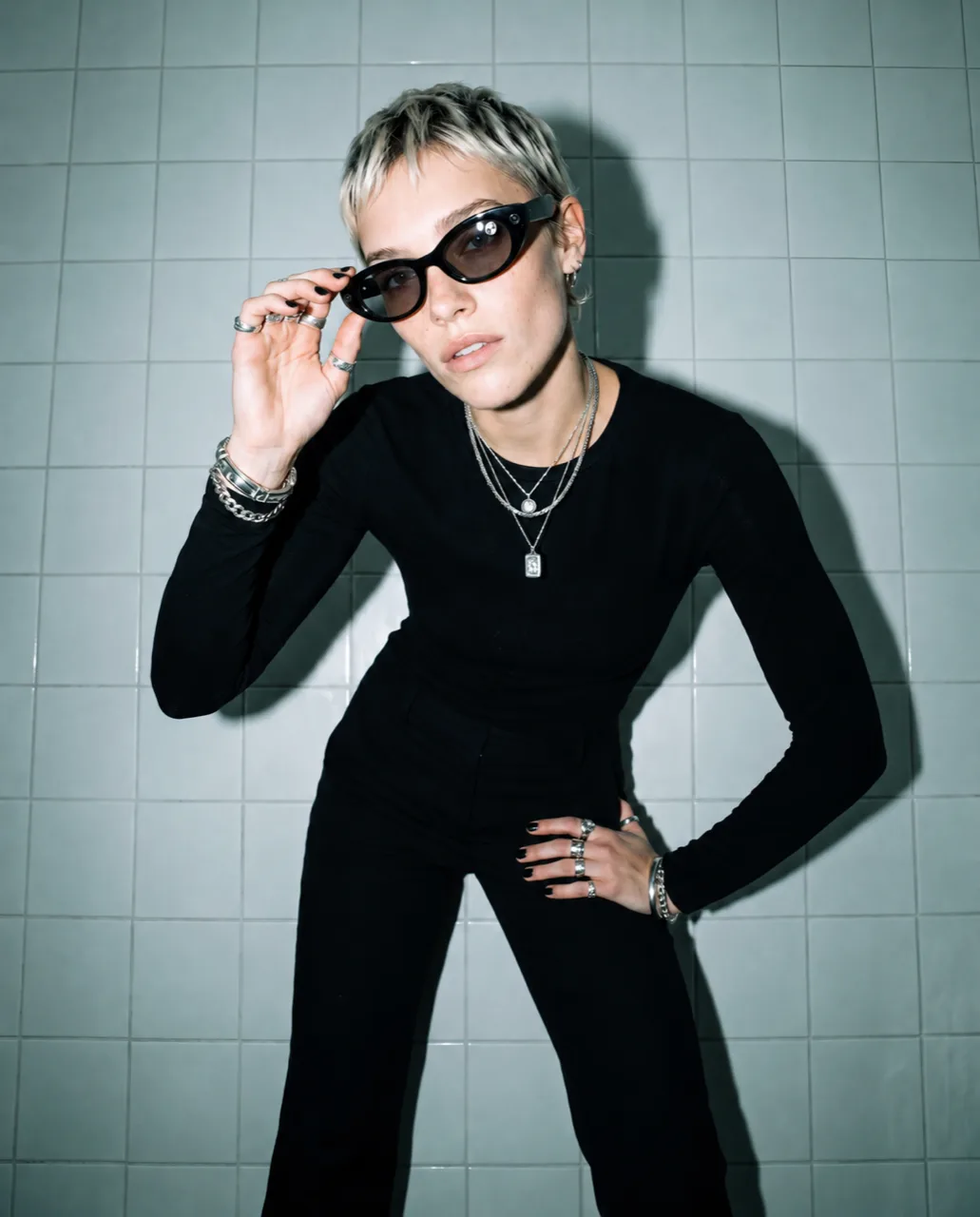
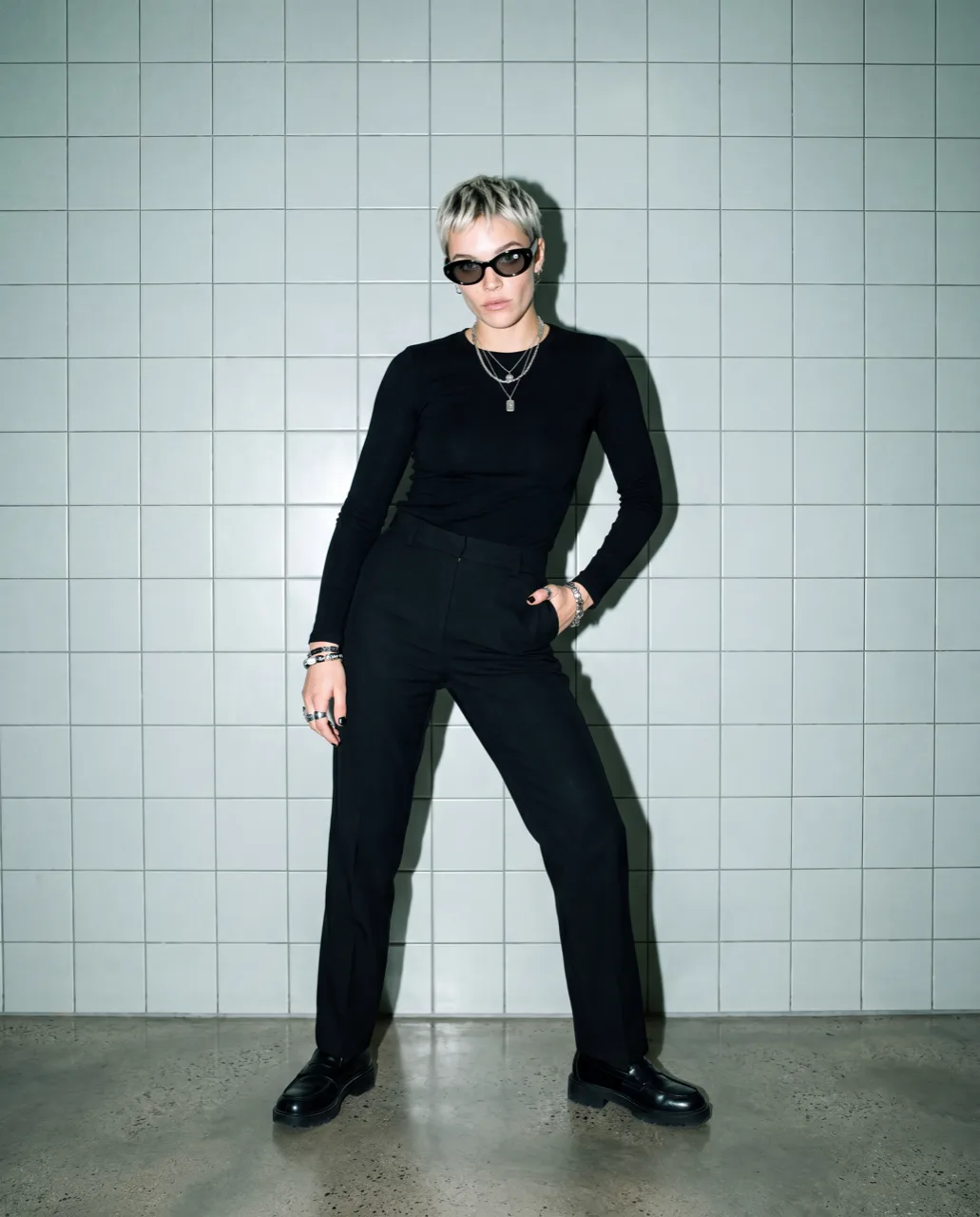
I kept the whole set in one small room of pale tiles and lit it with hard, direct flash. The flash throws a dark shadow onto the tiles behind her and puts a sharp highlight on the lenses.
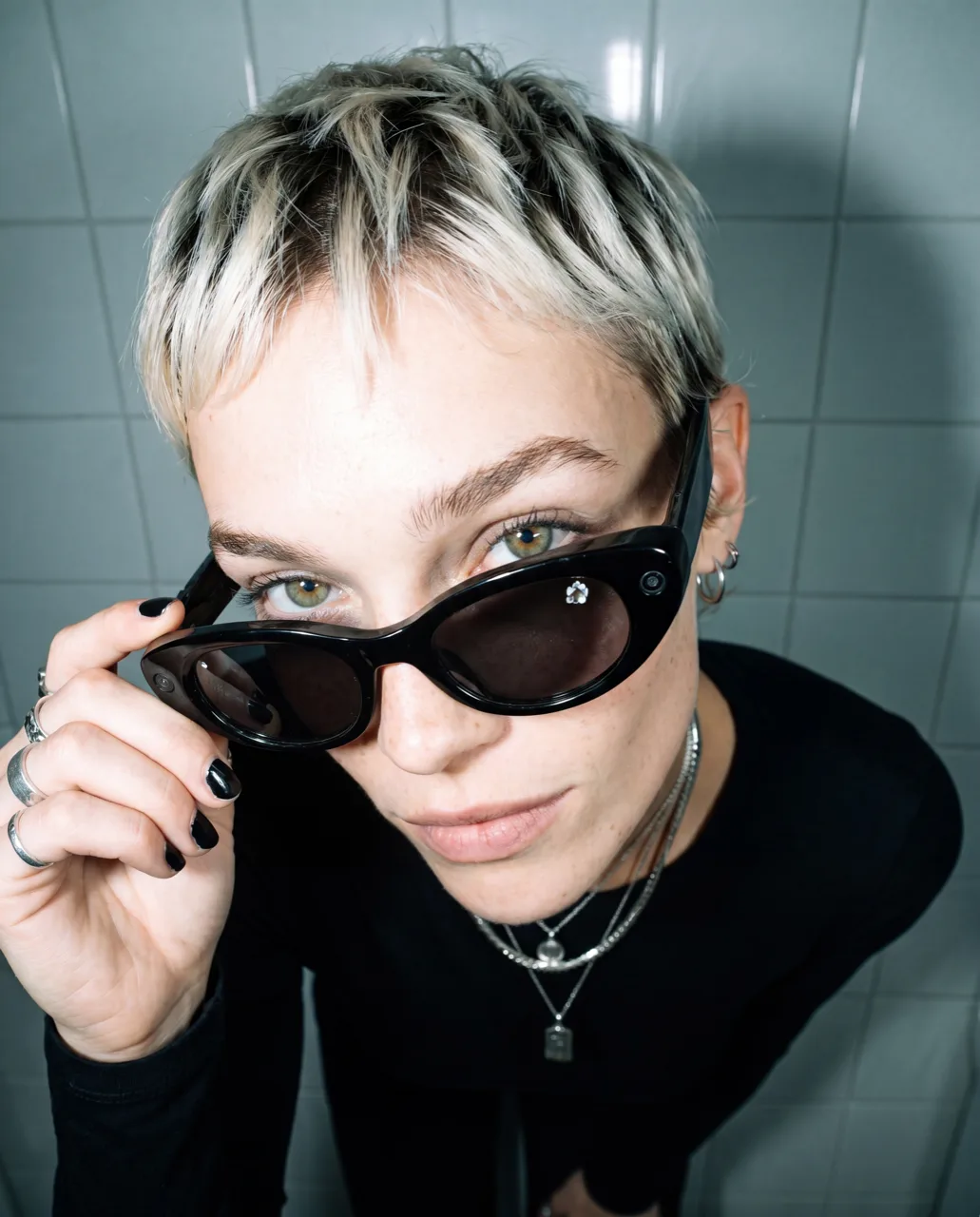
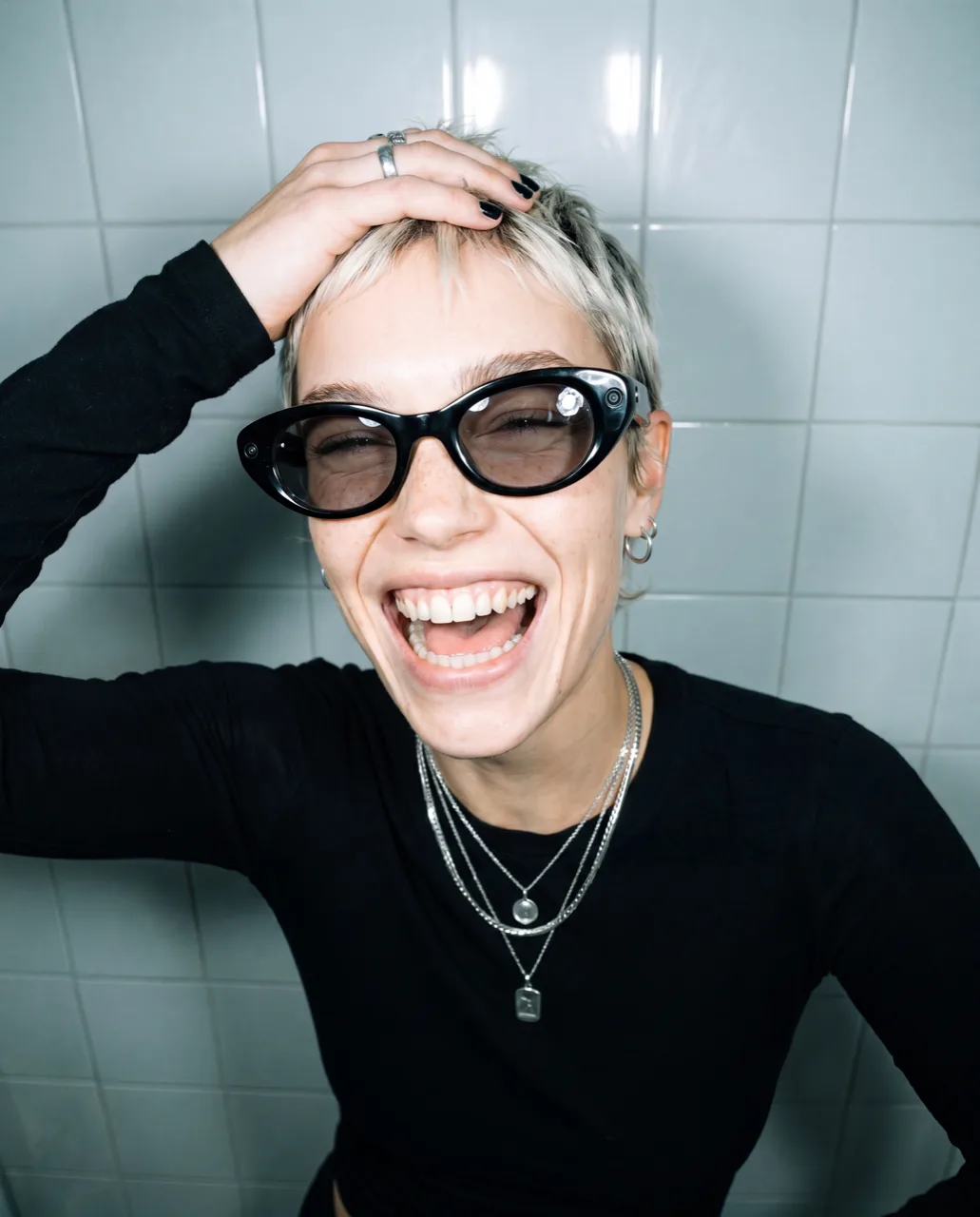
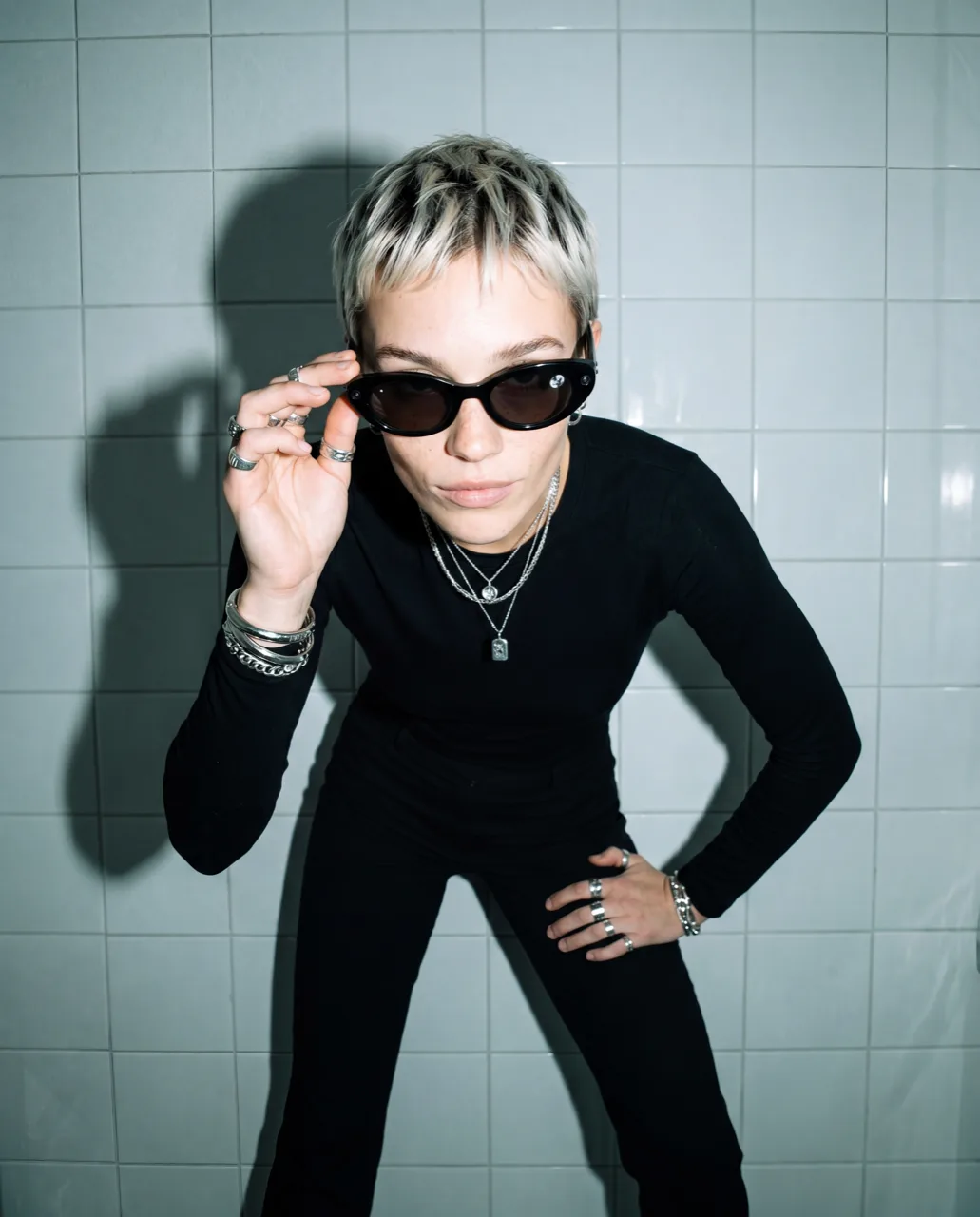
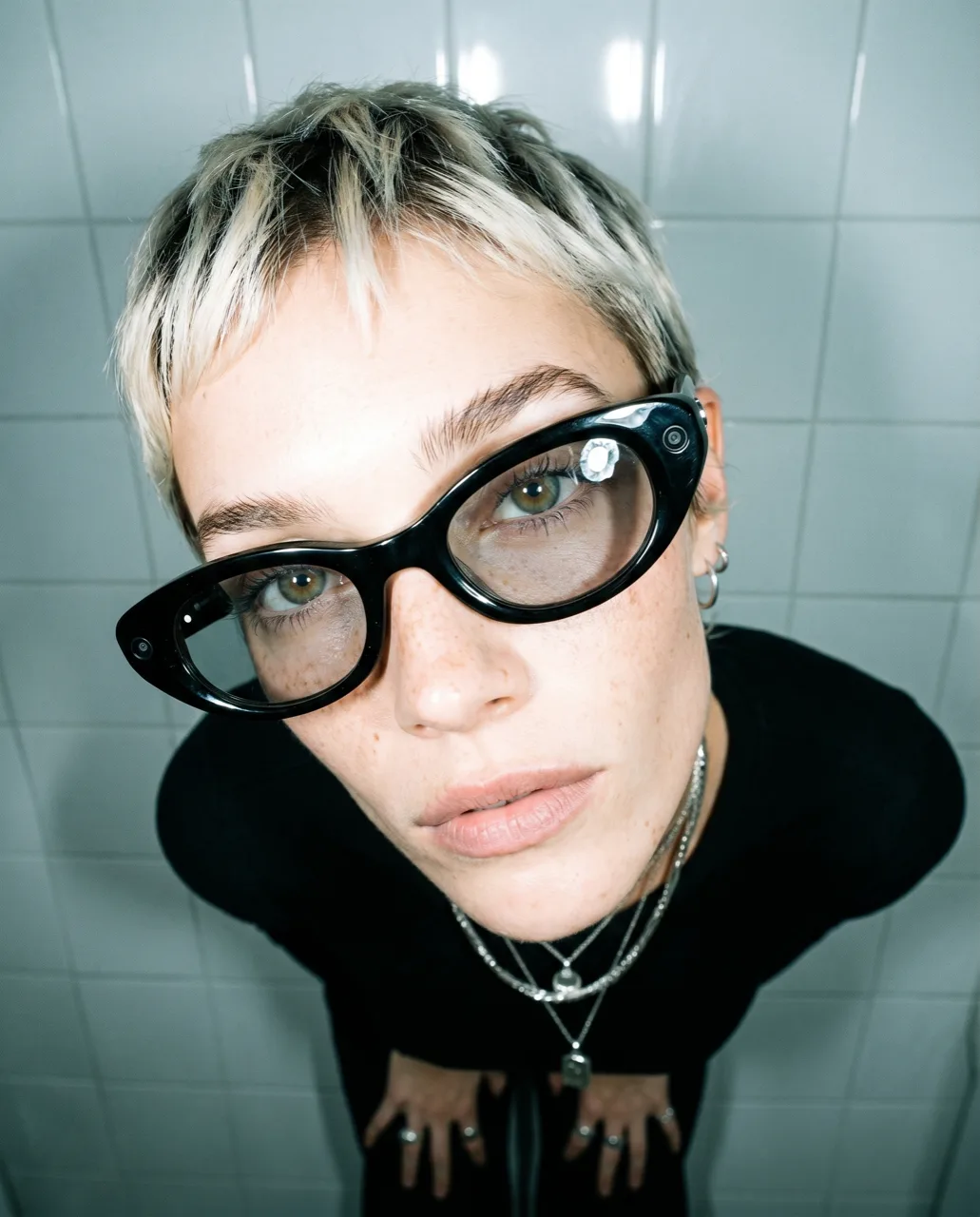
She has a bleached crop with dark roots, freckles and black nails. She wears black throughout, a fitted long-sleeved top and trousers, with stacked silver rings and bangles and fine silver chains, so the glasses sit inside one simple look from the first portrait to the last. The poses stay loose. She laughs with a hand pushed through her hair, lowers the glasses to look over them, leans in with a hand on her hip and stands full length against the tiles. The three pairs open the set on their own, laid out on the tiles, before you see them worn. In one close portrait a small crystal sits at the corner of the clear pair and catches the flash.
What was hard
The glasses had to stay the same glasses while the camera moved around her face. They keep their cat-eye shape whether she looks straight at the lens, turns into profile or looks up at a lens held above her, and the small camera stays the same size and in the same place.
The lenses were the other test. The dark ones have to take the flash without turning into mirrors, and in the clear pair her eyes have to sit behind the glass at the right depth, with the highlight on the surface in front of them. The fit matters too, the bridge resting on her nose and the arm running back over her ear in the profile. I cast her first, in a separate round of portraits, and then held that one face across the seven frames she appears in. The challenge was making the glasses feel natural on the face while keeping their technical details precise. As smart glasses, the camera placement, frame proportions and integrated hardware needed extra attention across every image. I released the project on launch day, so those details were central to presenting a newly introduced product convincingly.