The brief
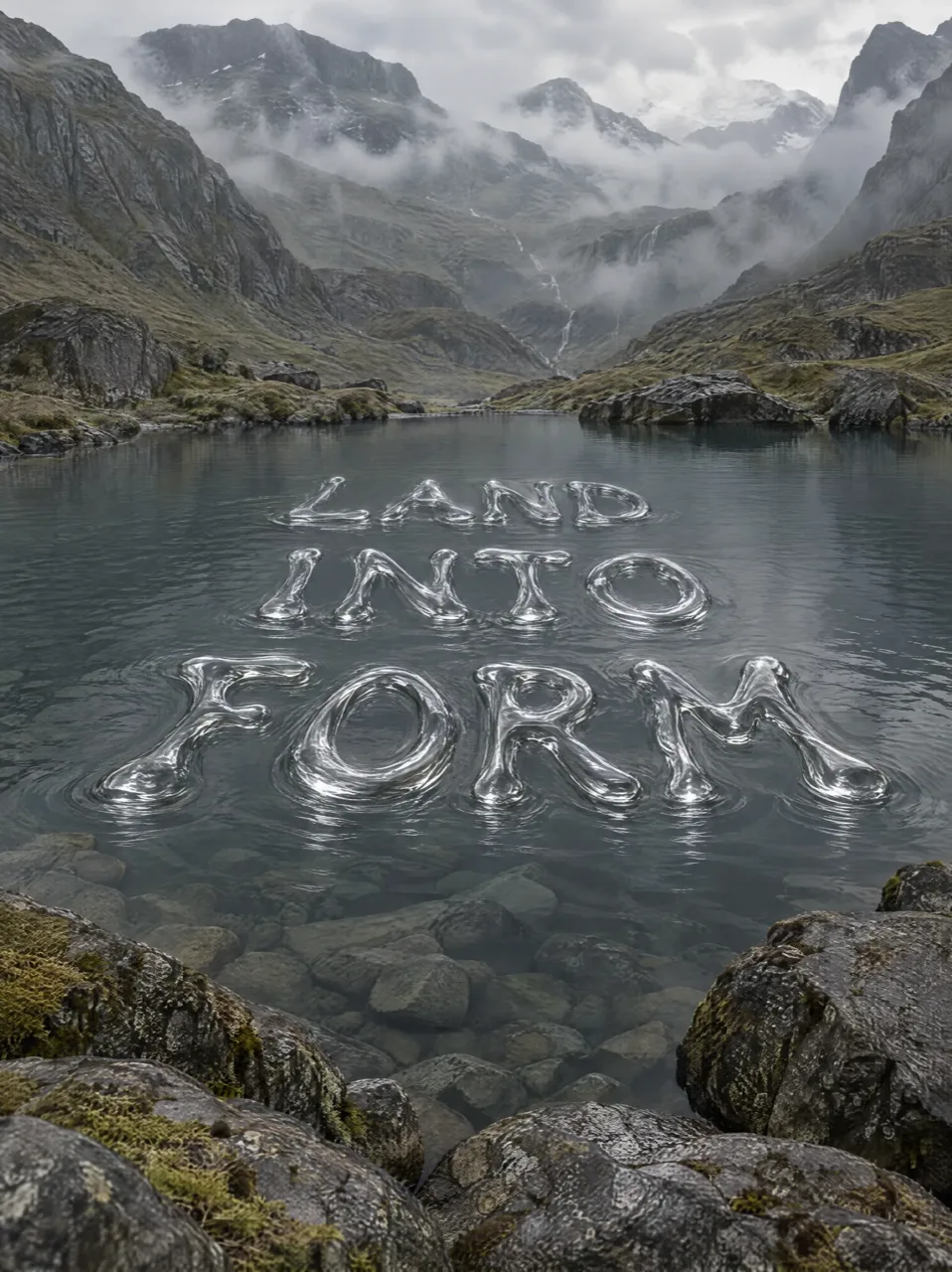
LAND INTO FORM is a self-initiated AI fashion campaign for a concept collection of gowns, with no client involved. I wanted to find out whether one real place could shape a whole collection, from the colour and drape of the gowns to the ground beneath the women.
The place is the Scottish Highlands. Thirteen photographs I took on my phone over three days at the end of August 2026 became the reference: falls dropping through wooded gorges, a shallow river running over stones, lochs under low cloud and long stretches of moor. Nearly all of them have water in them, and so do most of the frames on this page. The gown ideas came to me during the trip. Being there gave the collection its direction, with the colours, textures and movement of the landscape feeding into how I imagined the garments.
Working from my own pictures was deliberate. References gathered from a screen are already inside the model, so I would rather bring something back from a real place. A UK or European label could start a campaign the same way, from a place it can name and walk through.
I imagined the collection as evening wear that could also work in fashion editorials. I wanted the gowns to feel wearable, with enough presence in their shape and drape to carry an editorial image. Every image here is made with AI; the trip photographs are mine.
The direction
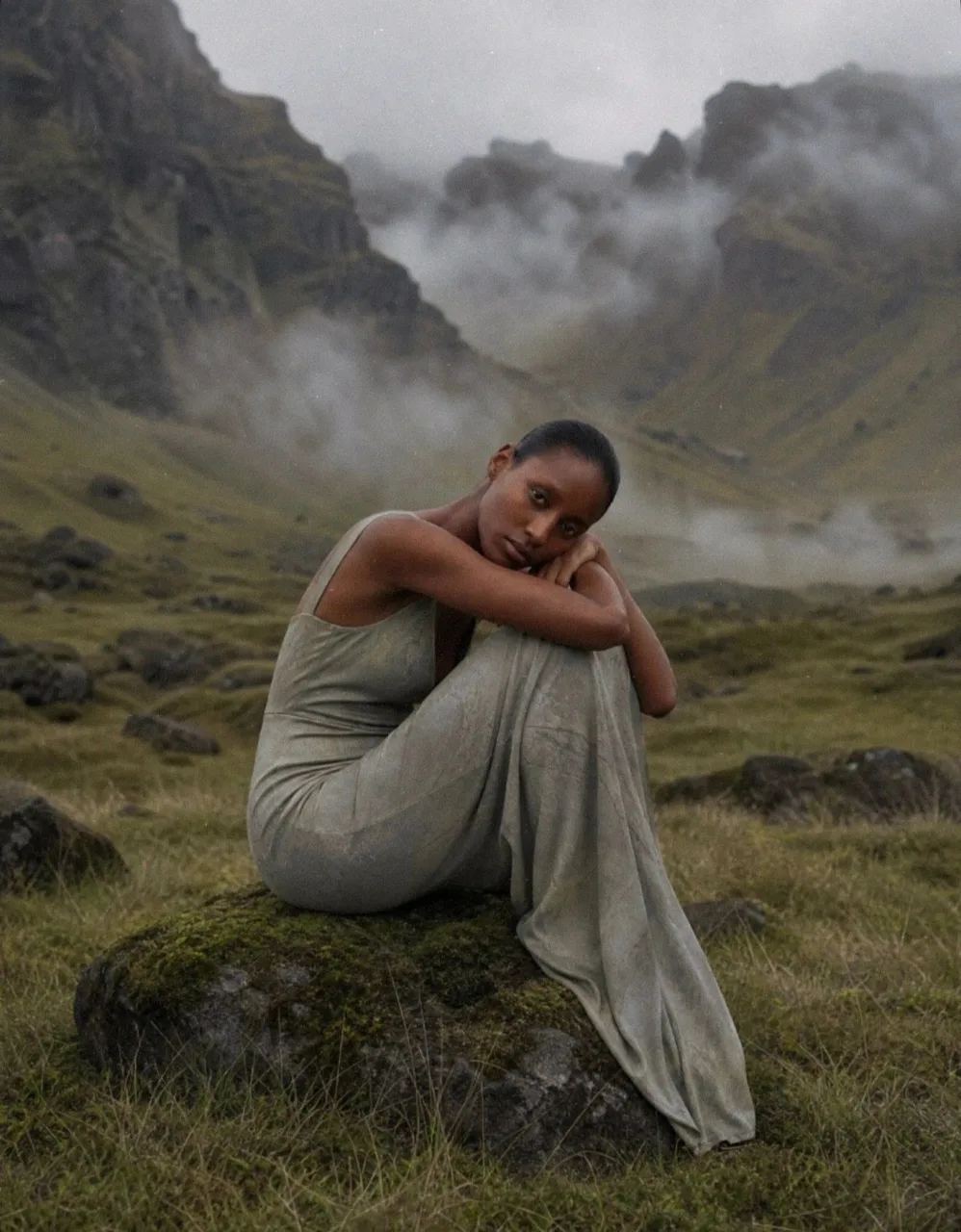
The direction stayed close to the trip photographs. The light is overcast throughout, soft and grey as it was for much of those three days, and mist sits low in the valley frames. My identity sheet for the cast sums up the look in four notes: natural beauty, editorial realism, muted tones and analogue grain.
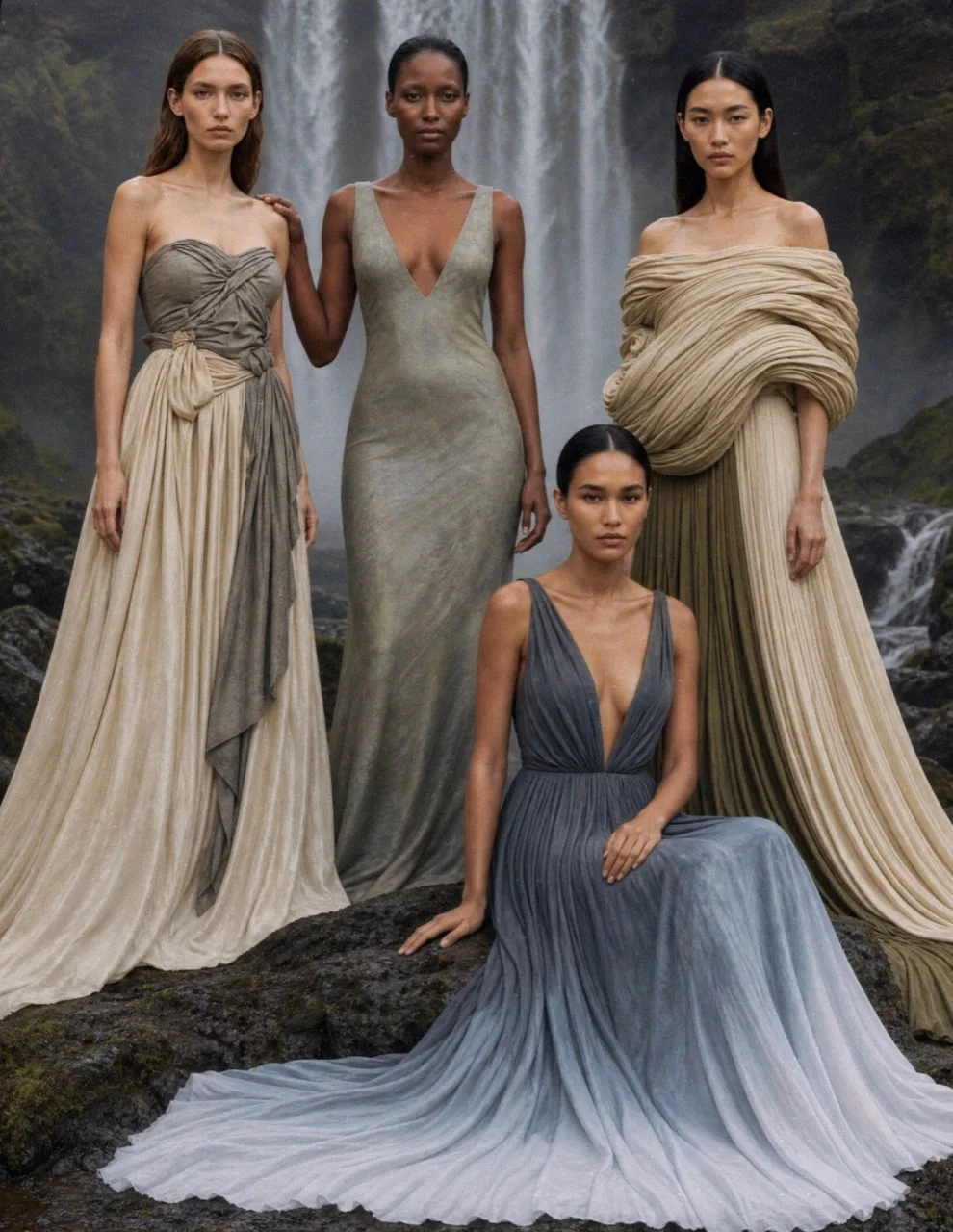
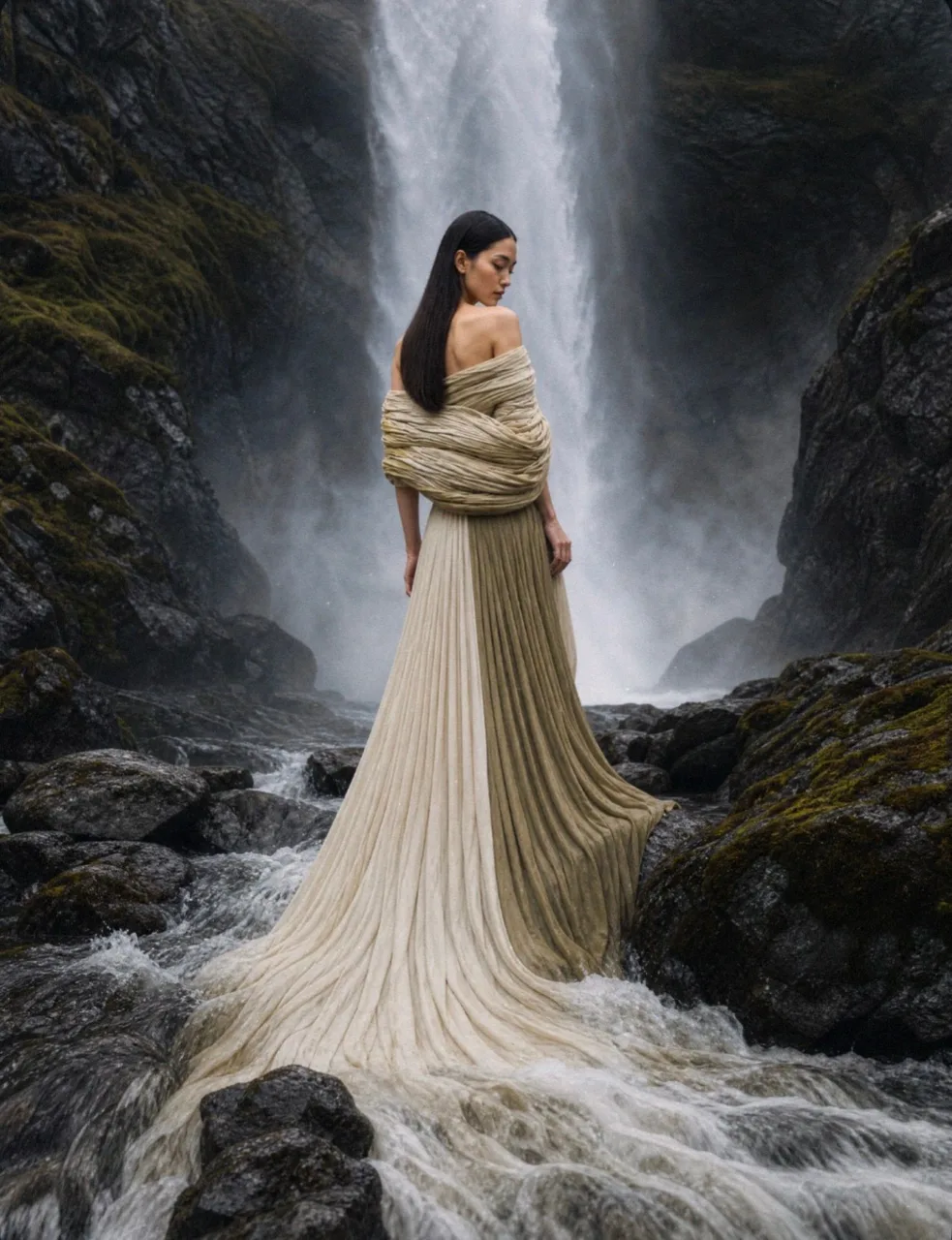
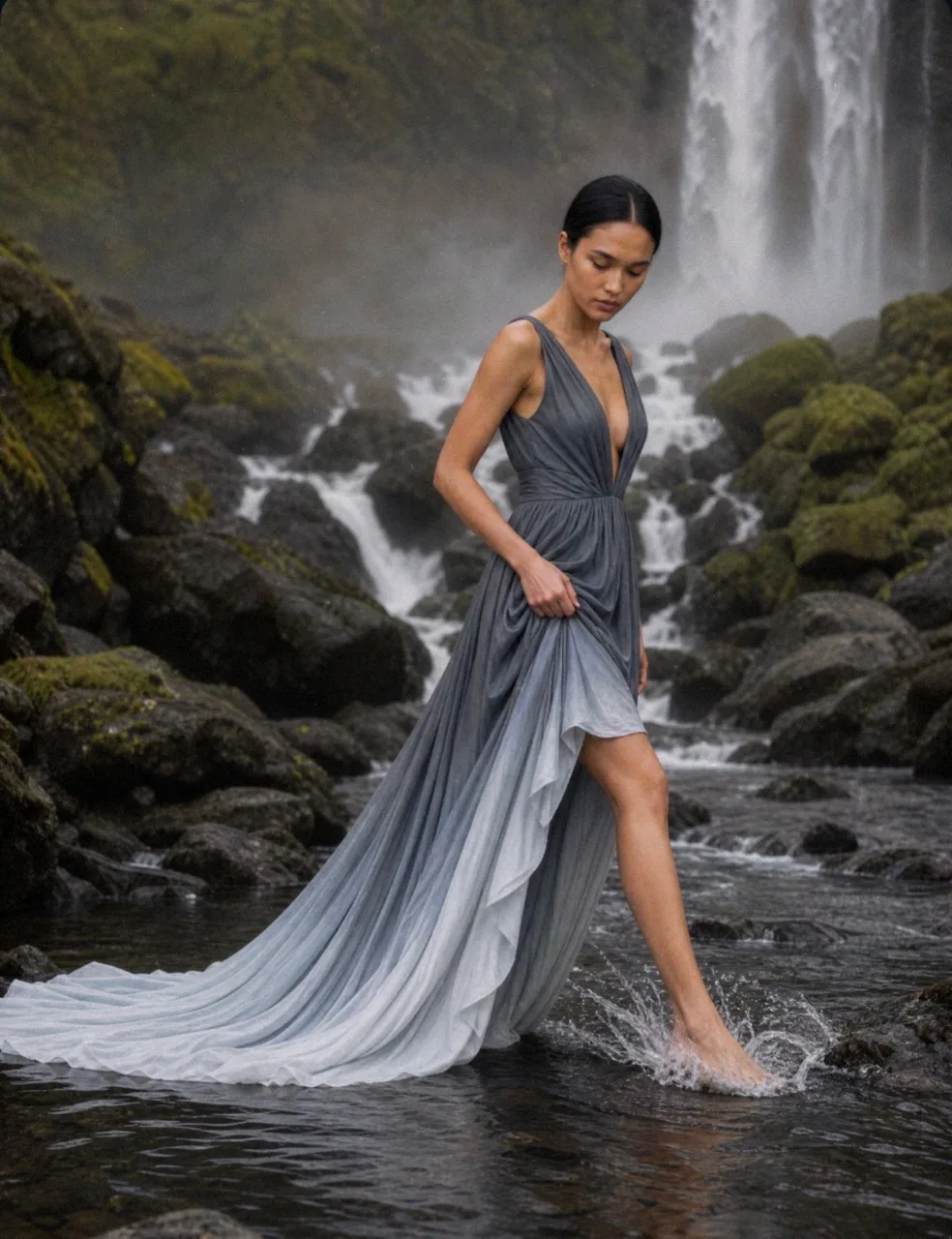
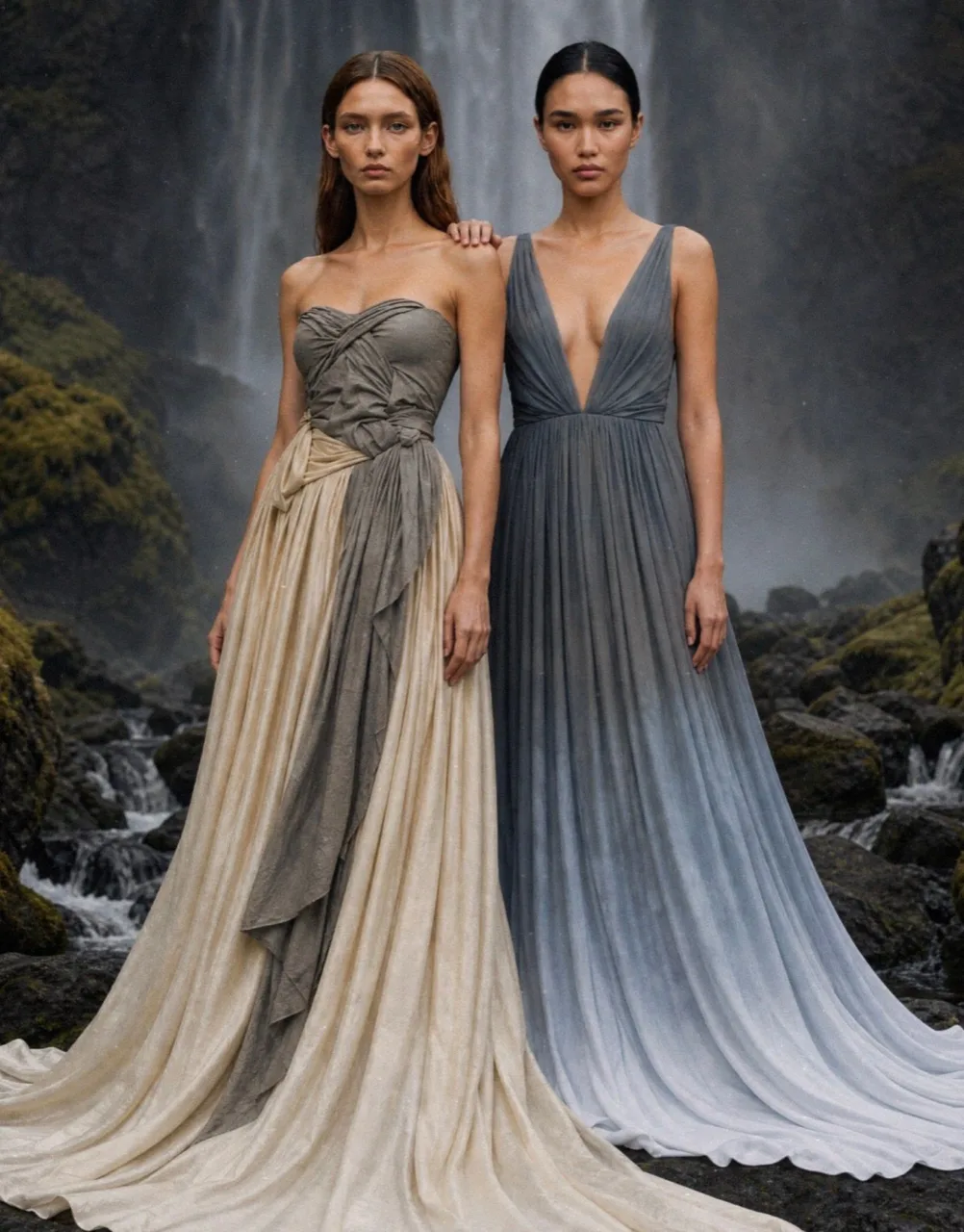
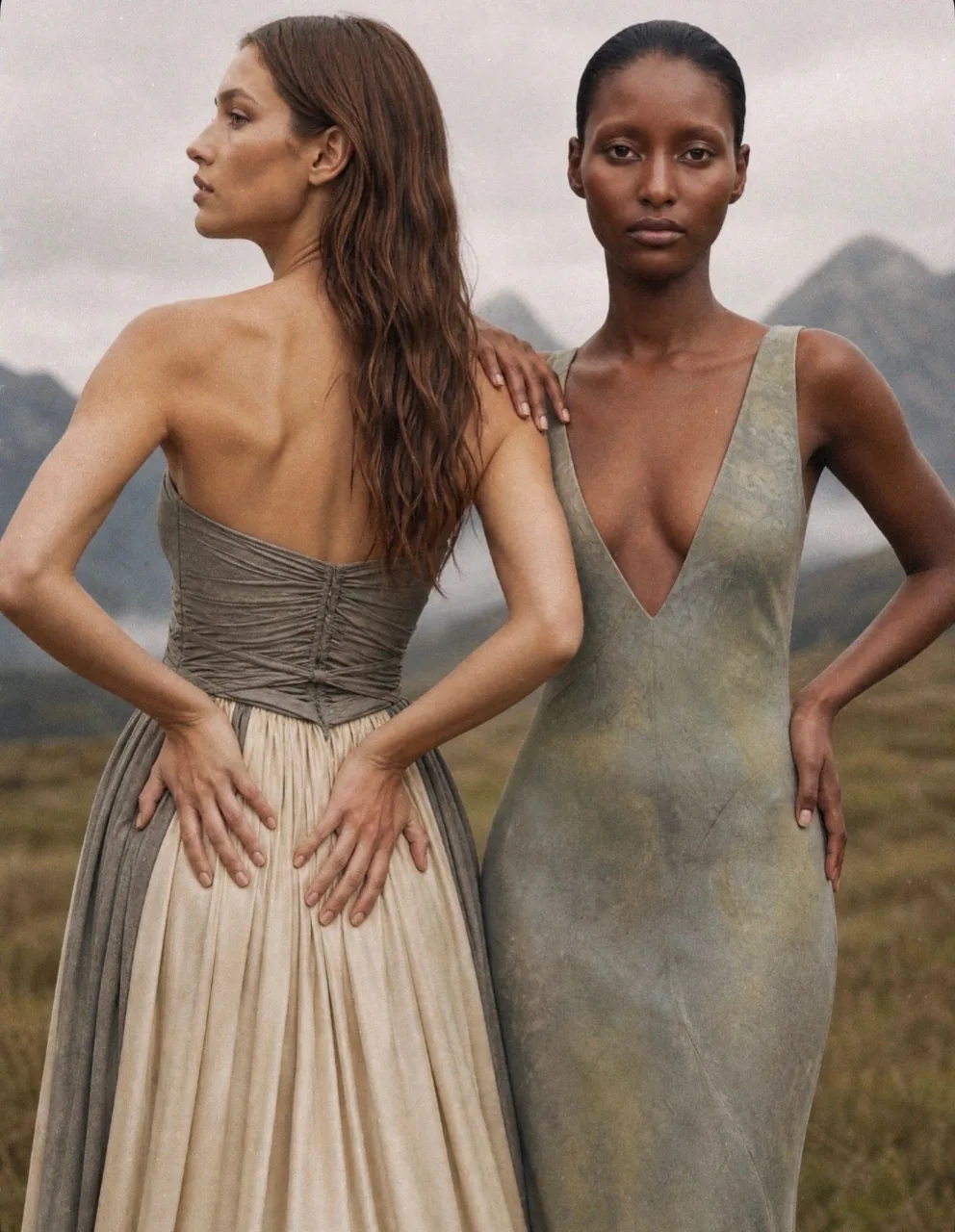
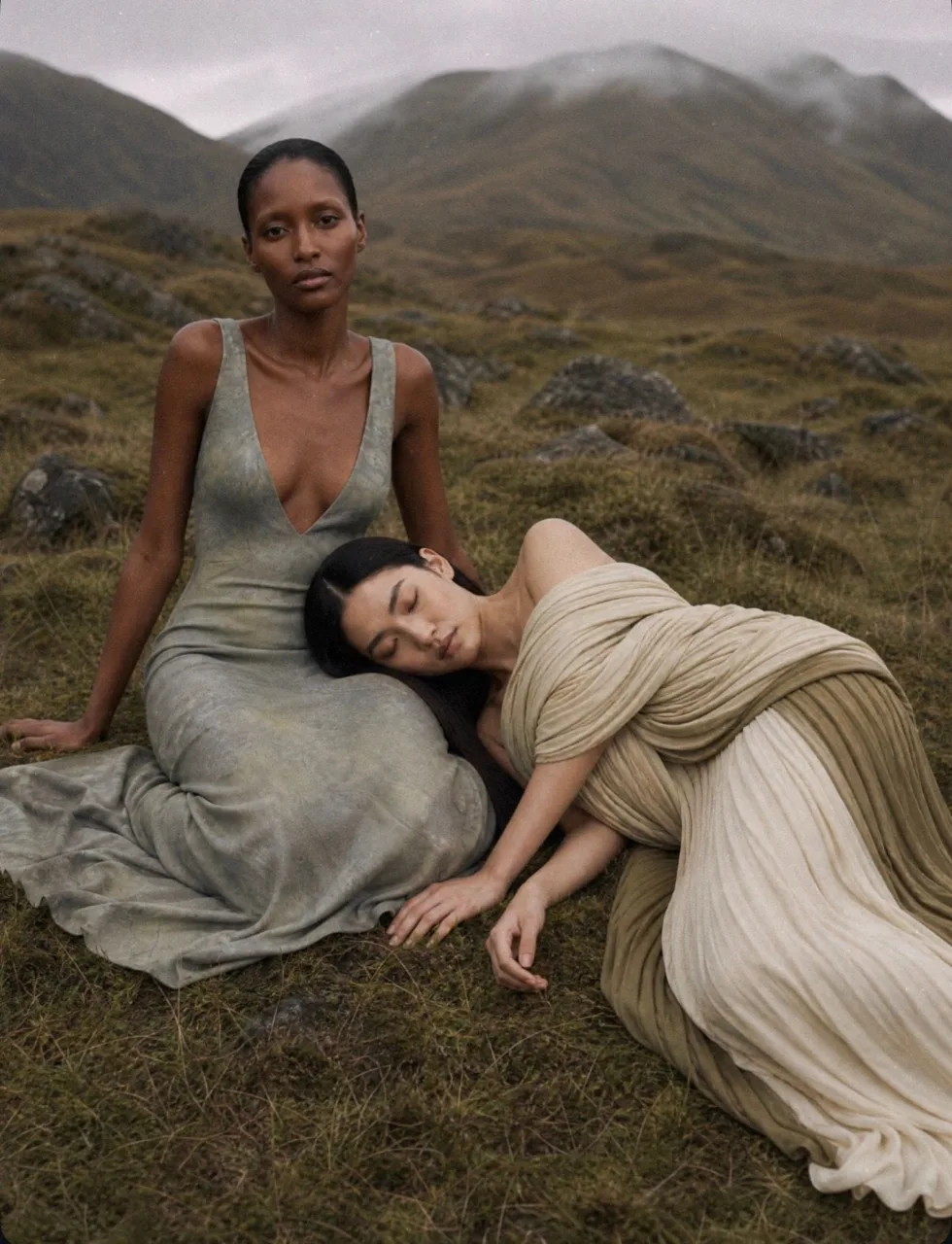
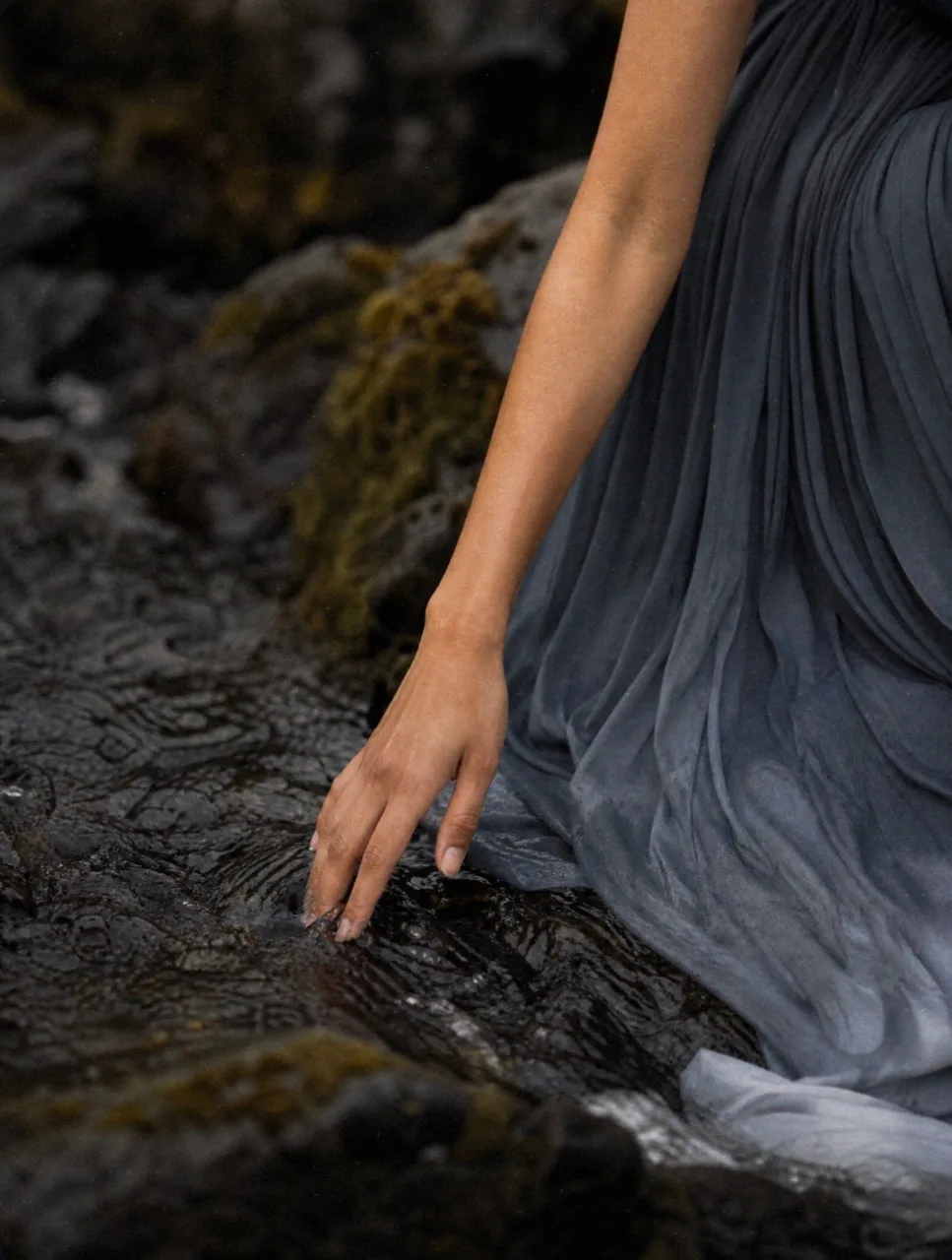
Each gown has its own colour and its own way of falling. A cream gown is wrapped in deep folds across the shoulders and ends in a long pleated train, while a slate gown fades to near white at the hem. The others are a sage slip dress with a mottled finish and a strapless gown with a twisted stone-grey bodice over a cream skirt.
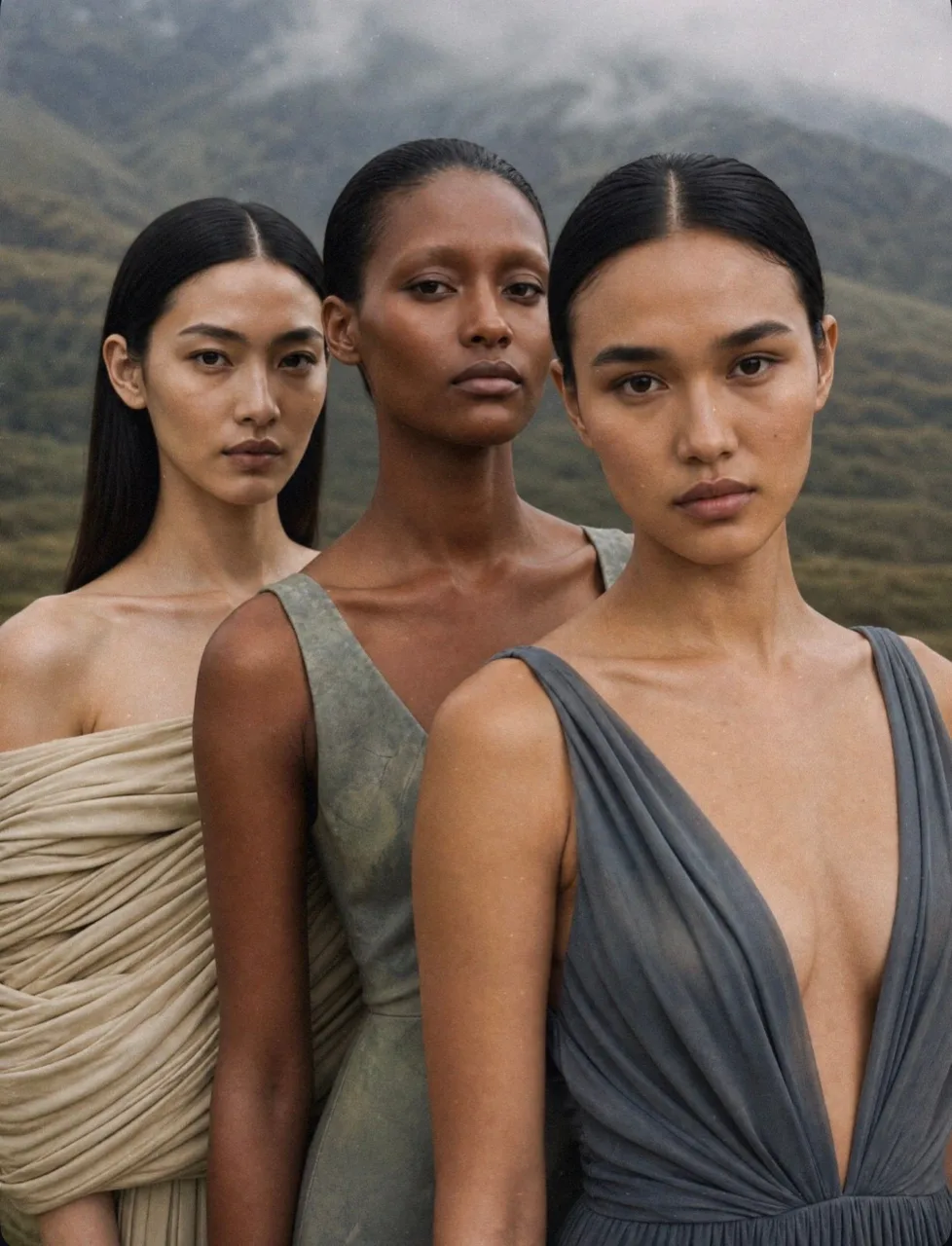
The cast is four women, AI fashion models made for this collection, with skin tones from light to deep brown and hair from long waves to slicked straight back.
The first drafts went further. Some had coats printed with cliffs and falls, and in one the hem of a gown became the waterfall. I kept the plainer gowns.
What was hard
The hard part of a set like this is keeping each woman, and her gown, the same from one frame to the next, whether she stands alone in the spray of a fall or poses with the rest of the cast. That is the test any clothing brand should put to AI models. Group frames make it harder, because every extra face is one more that can drift.
The identity sheet also defines each woman by skin tone, undertone, hair and the gown she wears. For the final round I made character sheets for the cast on a plain grey ground, with each gown from the front and back and a close portrait of the face, and built the finished frames from them. It is how I keep any set consistent. I decide the rules first, then hold every frame to them.
The gowns also had to behave like real fabric getting wet, with a train spread across rock in the spray of a fall and a hem trailing into shallow water. Even with the character sheets, some garment details still needed correcting by hand. I retouched those areas in post-production to bring the clothing back in line with the designs and keep the finished images consistent across the collection.