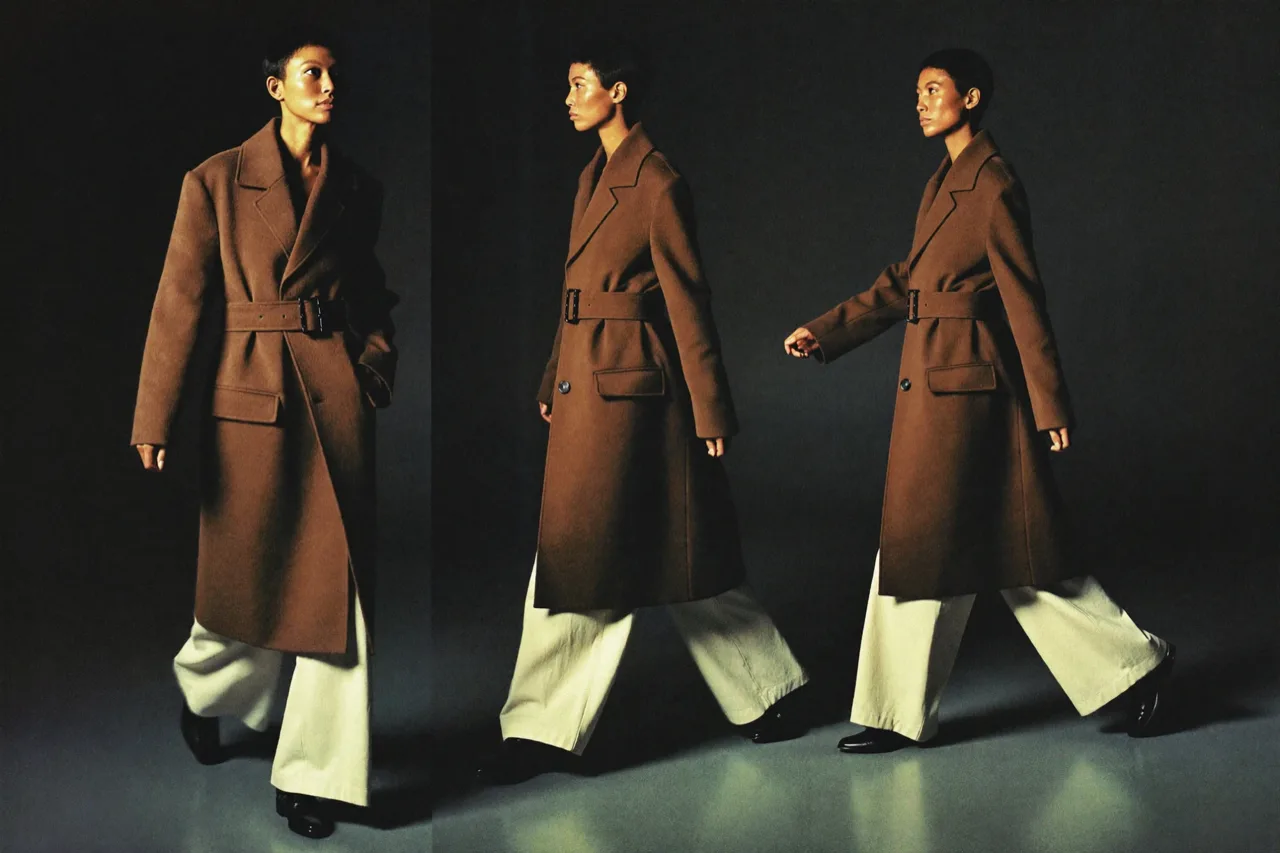
AI models for clothing brands: what to know before you cast
AI models can be used to present real clothing in campaigns, lookbooks and on-model imagery. The useful questions start with your collection: who should wear it, what should the images communicate, and which details must stay accurate? Agreeing those points gives you something concrete to judge the work against.
At Bilder Studio, I work from the brand's identity and garment references to develop the cast, setting and visual direction. I then refine the selected frames by hand. AI can reduce the need for locations, travel and a physical shoot, but the direction and finishing still take work. A convincing face is only one part of the image.
What do we mean by an AI fashion model?
The term covers several approaches. Establish which one you are discussing before comparing a proposal or agreeing a brief.
| Approach | What it means | What to agree |
|---|---|---|
| Generated cast | A fictional person created for the imagery, rather than intentionally reproducing a named individual. | The casting direction, reference material and how the person will stay recognisable across the set. |
| Digital twin | A digital representation of an identifiable real person. | Specific permissions for creating and using that likeness, including agreed uses, control and payment. |
| AI edits to a photograph | An existing image is altered, for example to show a different outfit or setting. | Whether the source-image rights and the model's agreement cover the proposed edits and uses. |
These can overlap. A proposal should explain what will happen to the supplied photographs and whose likeness will appear. Calling a face generated does not establish that every reference or use is cleared.
Start with the person your brand needs
The cast is part of the art direction. Expression, posture, styling and the way someone occupies a frame all change how the collection feels.
Give the casting brief more to work with than “a beautiful model”. Describe the presence you want: composed, playful, direct, reserved. Explain who the collection is for and how the person should relate to the clothes. Include the range of ages, body shapes and skin tones you want represented across the campaign.
An illustrative casting brief: “An assured, relaxed presence. Natural posture, minimal styling and room to see how the tailoring sits. Keep the jacket fastening and trouser waistband visible in the product-led frames.”
That connects a creative preference to something you can review. If a reference appeals because of its expression or styling, say so. A useful reference does not have to become a request to reproduce that person's face.
How to keep one person recognisable across a set
Approve enough of the casting direction to judge more than one flattering angle. A portrait, a wider view and a different pose can reveal whether the person holds together as the scene changes.
A character sheet can provide a shared reference. The important part is having a clear basis for comparison, then reviewing the developing frames alongside it. Here are four connected decisions to carry through the work:
Keep the cast and collection connected
- Cast Agree the person's appearance and presence.
- Garment Establish the clothing details from the supplied references.
- Direction Connect the styling, setting and light to the brand.
- Review Compare selected frames together and refine discrepancies.
Look at facial proportions, hairline, apparent age and body proportions. Allow for expression, perspective and lighting: a person does not look identical from every angle. The question is whether the differences make sense, or whether the image has introduced another person.
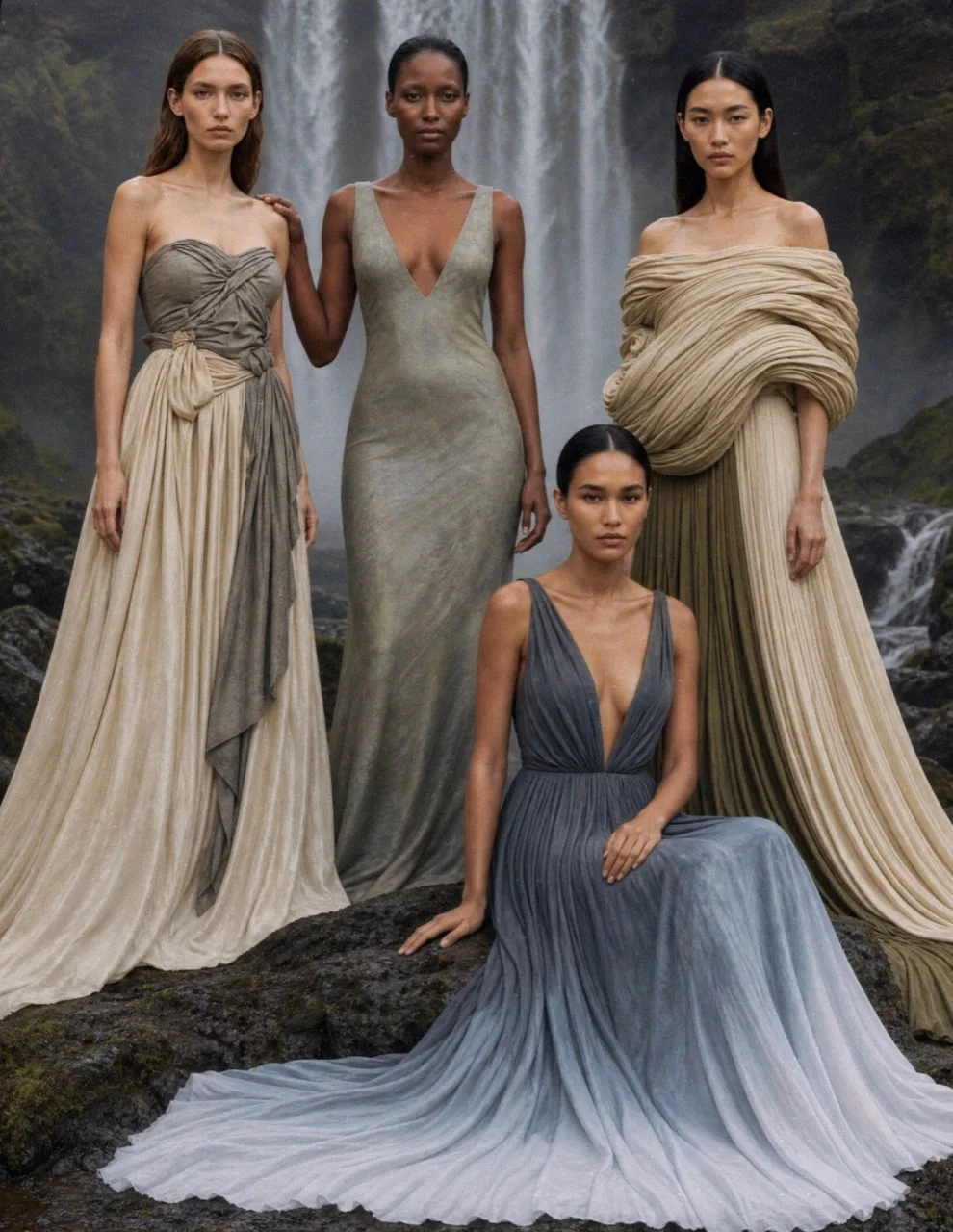
My LAND INTO FORM concept collection brings a generated cast and original gown designs into Highland landscapes. It shows how casting, clothes and location can belong to the same idea. It is a self-initiated study of casting and art direction.
Character sheet

Finished frame
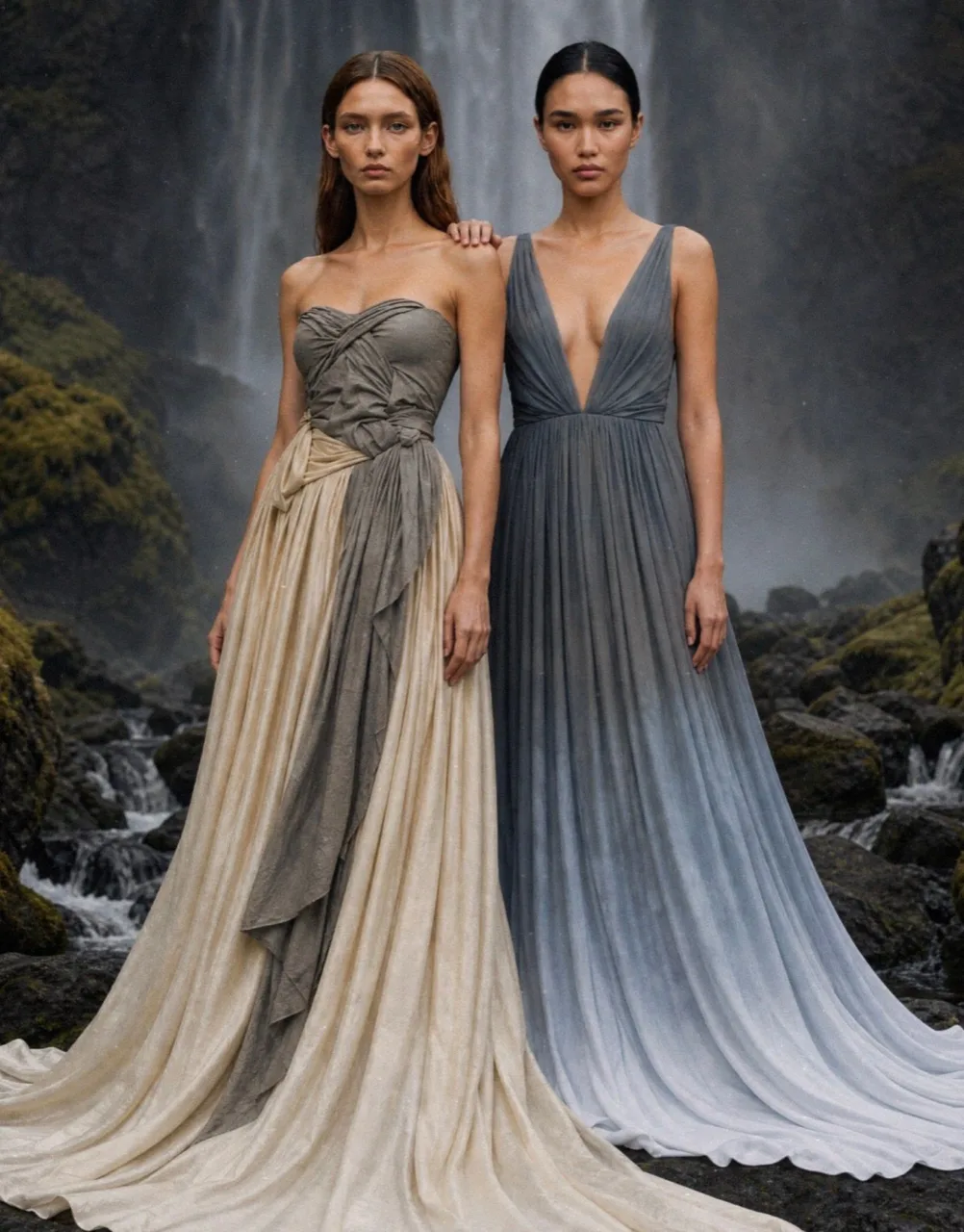
When reviewing your own set, open the selected frames together. Note specific differences: “The jaw shape changes in this frame” gives a clearer correction than “the model looks wrong”. My guide to consistent AI product images covers the wider review of colour, light and product details.
The clothes need their own review
A face can be convincing while the garment has changed. Keep the intended product and colourway beside the images during review, with clear views of the details that matter.
| Check | Compare with the garment references |
|---|---|
| Cut and construction | Neckline, seams, sleeve length, fastening, pockets and overall proportions. |
| Fabric | Weight, surface, transparency and the way the material folds. Check that a fluid fabric has not become stiff, or an opaque one sheer. |
| Colour and pattern | The correct colourway, print scale and placement. Consider the lighting without letting it disguise a changed product. |
| Styling and visibility | Whether a hand, pose, crop or accessory hides a feature the customer needs to see. |
Showing a garment is not the same as testing its fit. A generated image on a different body shape does not establish how a particular size fits. Size and fit claims need support from the actual garment, measurements and fitting information. A photograph of one model also cannot guarantee the fit on an individual customer.
If your brief includes a specific size, supply the relevant garment information rather than assigning a size to a figure by appearance. Where length, stretch or support matters, identify what the finished image needs to communicate and the evidence it should reflect.
Full frame
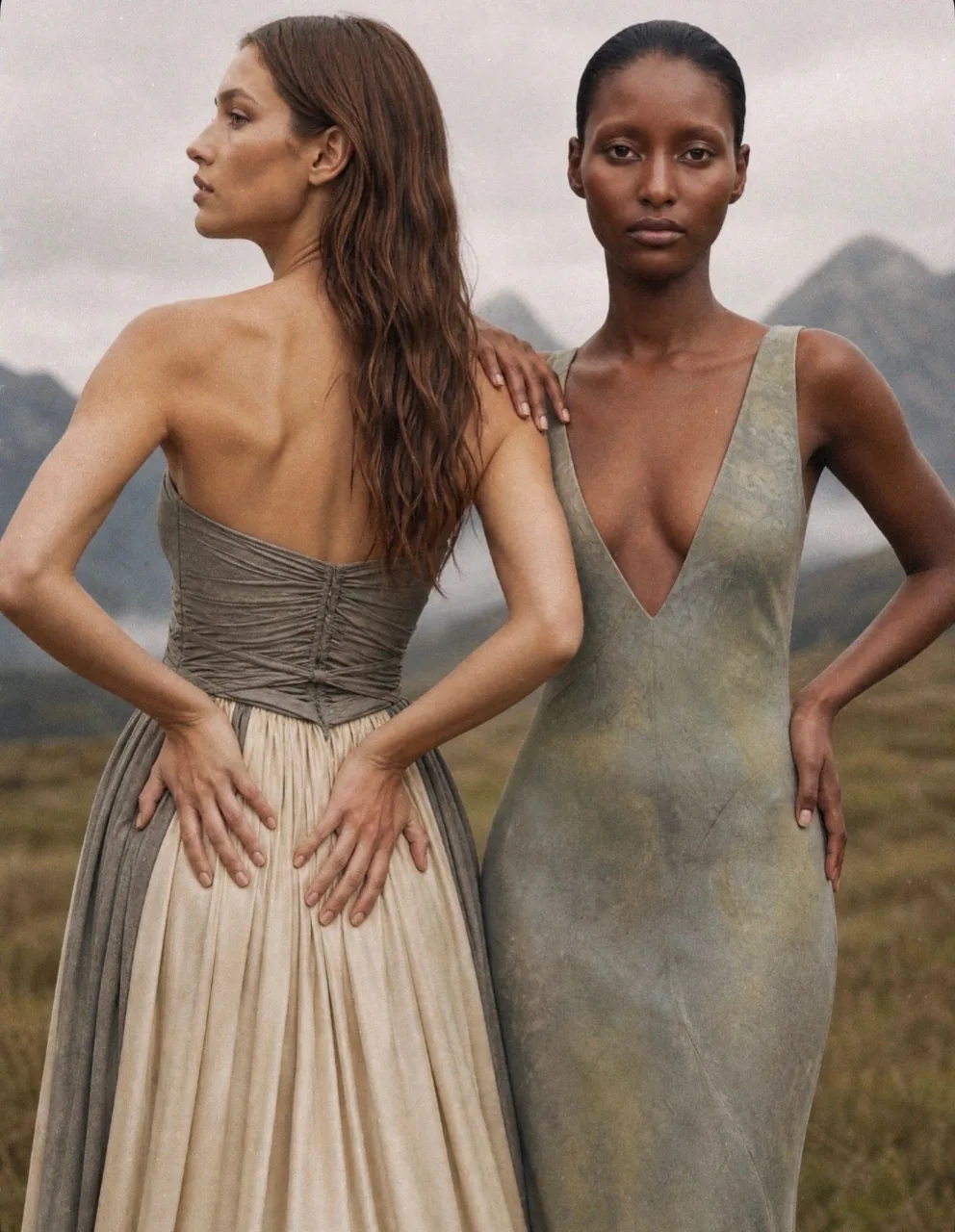
Detail

- Ruched corset back
- Centre back fastening
- Corset into skirt
Review skin tone alongside the lighting treatment too. A change of scene can alter its appearance, but that needs to make sense across the set. Casting decisions should remain visible in the finished work.
Digital twins and permission to use a likeness
My fashion concept work includes generated casts. Creating a digital version of a real model or ambassador brings a separate discussion about permission, control and the agreed uses of their likeness.
Do not assume that permission for an earlier photoshoot covers creating a reusable digital version of the person. Equity's published position is that general performance agreements should not be treated as permission for AI training or digital imitation when those uses were not expressly covered.
For a proposed likeness-based project, clarify what will be created, the permitted edits, channels, duration, payment and approval arrangements. Also discuss whether the likeness can be reused for later campaigns or shared with another provider. Have the relevant agreements checked for the actual project and markets involved.
For a fictional cast, describe the intended person without treating a celebrity or another model as an unapproved template. If a result raises a recognisable-likeness concern, resolve it before use.
How clothing brands have used AI models
These examples involve different production choices. They are useful context for your brief, rather than a single model for every brand to follow.
| Brand and date | What was published | What it helps you consider |
|---|---|---|
| Levi Strauss & Co., March 2023 | Announced a pilot using generated models, then clarified that it should not have been presented as advancing or replacing its diversity commitments. Company statement. | Distinguish the range shown in imagery from the people employed and represented by the business. |
| H&M, July 2025 | Released its first images featuring digital twins, following its earlier announcement. Company release. | Identify whether the project involves a fictional cast or digital versions of real people. |
| Zara, December 2025 | Reuters reported AI edits showing real models in different outfits. Inditex said it agreed the work with models and compensated them. Reuters report. | Discuss the permitted changes to existing images and the terms for those uses. |
| Guess, August 2025 Vogue issue | A campaign advertisement used a generated model and included an AI disclosure. Coverage described concerns about beauty standards and modelling work. ABC reporting. | Consider what the casting communicates and how customers will understand the imagery. |
Why AI fashion imagery can attract criticism
The concerns in the Guess coverage include who gets represented and what happens to paid creative work. Those questions are not answered simply by making an image more realistic. Nor does an AI label settle every concern about the casting or the production decision.
For me, the creative questions are whether the cast belongs to the brand, whether the clothes are represented accurately, and whether the images work together. AI can be useful for a straightforward fashion image as well as an imagined campaign world. Saving production effort can be part of the brief; direction and finishing determine what the brand gets from it.
A brand should also be able to explain its choice plainly. Describe what was created, how any real person's involvement was agreed, and the role of the imagery. Avoid presenting a generated cast as proof of the company's wider inclusion or employment practices.
Do you need to disclose AI fashion imagery?
For UK advertising, the ASA says there is no blanket requirement to disclose AI use, but disclosure may be necessary where leaving it out could mislead people. That is a contextual assessment, not a general exemption. ASA guidance.
The ASA also explains that disclosing AI cannot repair a fundamentally misleading message. Applied to clothing imagery, the practical lesson is to check what the image implies about the garment before relying on a caption. ASA disclosure advice.
Decide where the images will run before delivery. Check the current platform requirements and rules for the countries where the campaign will appear. When a disclosure is needed, plan how it will remain clear in the actual placement, including cropped or reposted versions.
A checklist before you approve the campaign
Use this as a discussion table with your team or creative partner. It helps make the decisions visible; it is not a substitute for the relevant agreements or product information.
| Decision | What to settle |
|---|---|
| Type of imagery | Generated cast, digital twin or edits to an existing photograph, with the approach clearly described. |
| Casting direction | The intended appearance, presence and range across the set, with references to review against. |
| Source material | The correct garment versions and reference images, with permission for their proposed use. |
| Real-person involvement | Where relevant, specific likeness permissions, agreed uses, payment and approval arrangements. |
| Garment review | Cut, construction, fabric, colour and visible details compared with the supplied references. |
| Fit claims | Any claim about size or fit supported by appropriate garment and fitting information. |
| Set consistency | The selected people and clothes reviewed across the full set, including the intended crops. |
| Publication | Required disclosures and channel requirements checked, with responsibility for final approval agreed. |
What to send me for a fashion project
Start with the collection and what you need the images to do. Send:
- Clear garment photographs, including front, back and important fabric or construction details.
- The intended placements, crops and deadline.
- A few references for the mood, styling or casting, with a note about what you like in each.
- Any details that need particular care, such as a fastening, print placement or colourway.
From there, we can discuss the direction, deliverables and scope. You do not need to arrive with a finished casting brief. The product photography brief template can help organise what you already know.
My AI fashion photography service brings the cast, clothes and setting into a connected visual direction, with hand finishing on the selected images. A Pilot costs £150–£400 depending on scope, and a Full Project starts at £750. The pricing page explains the offers and what affects the quote.
Common questions about AI models for clothing brands
Can AI models wear my real clothing collection?
Yes. AI can be used to recreate real garments from reference imagery and show them on a generated cast. The result needs checking against those references, including construction, fabric, colour and proportions. Agree which views and details the final images need to show.
Can the same AI model appear throughout a campaign?
A recurring generated cast can be developed across a set. It requires a clear visual reference and comparison between frames. Review different angles and poses early, then check the person alongside the clothes and overall direction as the set develops.
Which clothing brands have explored AI model imagery?
H&M released digital-twin imagery in July 2025, and Reuters reported Zara’s use of AI to show real models in different outfits in December 2025. Guess featured a generated model in an advertisement in Vogue’s August 2025 issue, while Levi’s announced a pilot in 2023. These examples involve different methods: creating a fictional person, representing a real model digitally, or editing existing model imagery. For your own brief, establish which approach is being proposed and why it suits the collection.
Does an AI model prove how a garment fits?
No. A visual representation is not a physical fitting. Claims about a particular size, length or fit need to reflect the actual garment and supporting information, whichever method is used to create the image.
Is using a digital twin the same as using a fictional model?
No. A digital twin represents an identifiable real person. That brings specific questions about authorisation, control, payment and reuse. Establish those terms separately from the creative direction and the licence for the finished images.